White Label Telemedicine Solution: Benefits, Features, and How to Choose the Right Platform
A White Label Telemedicine Solution lets healthcare organizations deliver virtual care under their own brand while using an established technology infrastructure.
A patient may have a video consultation today and need remote patient monitoring tomorrow. If both experiences sit under different brands, interfaces, or workflows, the care journey can quickly feel disconnected. For healthcare organizations building or expanding virtual services, the technology behind that journey matters, but so does how patients experience it.
A White Label Telemedicine Solution gives healthcare organizations a way to deliver virtual consultations, patient communication, and other digital-care services under their own identity. Instead of starting with a platform from scratch, providers can focus on shaping the experience around their patients, clinical teams, and existing care model.
What Is a White Label Telemedicine Solution?
Simply put, white-label telemedicine means using an existing telehealth technology platform and presenting it as part of your own healthcare service.
With a white label telemedicine platform, organizations can offer virtual consultations and related digital-care services without building the entire technology infrastructure themselves. They can also customise parts of the experience to fit their workflows and patient needs.
This approach gives providers a branded telemedicine platform without requiring them to build the entire technology infrastructure themselves.
Why Consider White Label Telemedicine?
There are several reasons healthcare organizations may choose this approach.
- Keep your brand visible: Patients can access virtual care through an experience that feels connected to your existing healthcare service.
- Create a smoother patient journey: A consistent interface can make digital appointments and communication easier to navigate.
- Reduce development work: An established platform provides the technology foundation, so teams do not have to start from zero.
- Adapt to your workflows: Customization can help organizations shape the experience around their services and patient needs.
- Support future growth: A flexible platform can make it easier to expand virtual services as requirements change.
What Should a White Label Telehealth Platform Include?
Your brand matters, but the right platform also needs to fit your workflows, patient needs, and long-term goals.
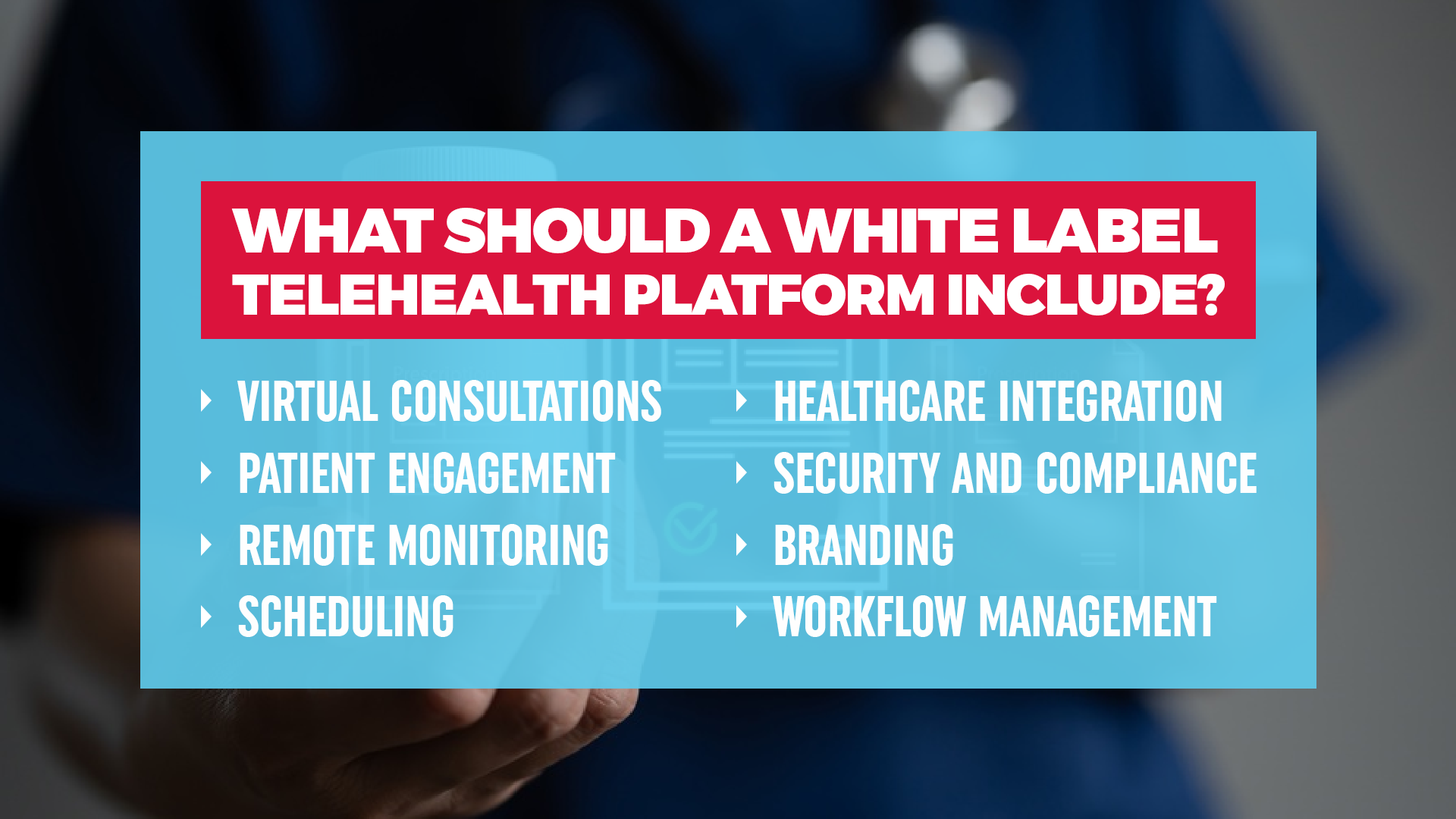
When comparing a white label telehealth platform, look at areas such as:
- Virtual consultations: Check how patients and providers connect and communicate.
- Patient engagement: Look for practical tools that support communication and follow-up.
- Scheduling: Appointment booking and reminders should fit naturally into existing workflows.
- Remote patient monitoring: If monitoring is part of your care model, check whether the platform can support connected devices and ongoing patient data.
- Healthcare integration: Consider whether the platform can work with your existing EHR or other healthcare systems.
- Security and compliance: Healthcare data requires appropriate safeguards and processes.
- Branding: Make sure the patient-facing experience can reflect your organization.
- Workflow management: Providers should be able to manage relevant tasks without adding unnecessary complexity.
How Can You Find the Right Telemedicine Platform?
Choosing a telemedicine platform becomes easier when you start with your actual needs rather than a long feature list.
First, decide how much customization you need. Then consider how the platform fits your clinical workflows. Think about the patient journey too. Is it easy to schedule an appointment, communicate with a provider, and continue care after the consultation?
Integration is another important consideration. If your organization already uses an EHR or other healthcare systems, check how the new platform will fit into that setup.
Finally, consider scalability, security requirements, implementation support, and the level of assistance available from the vendor.
Turn Virtual Care Into Your Own Digital Experience with DocToDoor
A strong virtual-care experience should feel like an extension of your healthcare organization, not a separate service. At DocToDoor, we help healthcare organizations bring virtual care into a more connected and personalised experience. Our platform supports video and phone appointments, secure chat, automated follow-up, EMR integration, and remote patient monitoring, with customization options for an organization's brand and care needs.
If you're looking for telemedicine software that brings virtual consultations and ongoing remote care together, explore DocToDoor or schedule a demo to see how the platform can fit your organization's needs.