Virtual Monitoring for High-Risk Patients
Closing Care Gaps Through Continuous Care and Real-Time Clinical Insights
Healthcare systems across the United States face an ongoing challenge. That is, providing consistent care for high-risk patients with chronic or complex health conditions. Traditional care models are built around infrequent visits, which makes it difficult to monitor patients whose health can change daily.
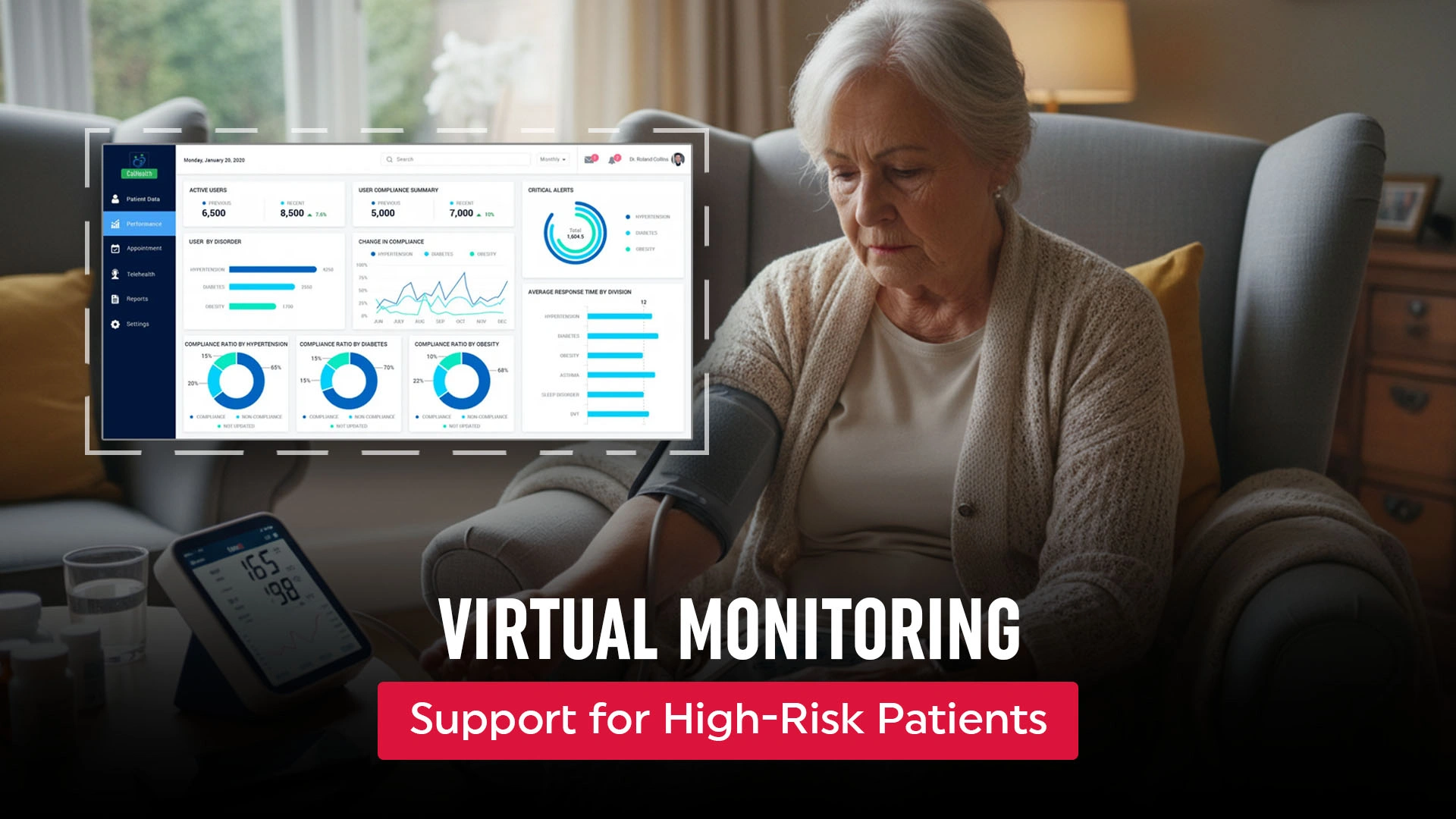
As a result, care gaps occur. Missed follow-ups, delayed interventions, and limited visibility into daily health data often lead to avoidable complications and hospital readmissions. Virtual patient monitoring offers a practical way to close these gaps and improve outcomes.
Why Care Gaps Are Common in High-Risk Patients
Care gaps typically occur when patients do not receive timely monitoring or treatment adjustments. This is especially common for patients managing conditions such as diabetes, hypertension, heart disease, respiratory disorders, or post-hospital recovery.
Traditional healthcare is largely episodic. Patients may only see providers every few weeks or months, even though symptoms and vitals change daily. Early warning signs are often missed until they become medical emergencies.
For high-risk patients, this reactive approach is not enough. Continuous, proactive care is essential.
How Virtual Monitoring Closes Care Gaps
Virtual patient monitoring enables providers to track patient health remotely using connected devices and digital platforms. Key benefits include:
- Continuous tracking of vital signs such as blood pressure, glucose, oxygen levels, heart rate, and weight
- Early identification of health trends and warning signs
- Faster clinical intervention before conditions escalate
- Reduced reliance on in-person visits
- Lower emergency visits and hospital readmissions
Supporting Patients Where They Are
Virtual monitoring removes common barriers that prevent high-risk patients from staying engaged with their care.
- Patients can take readings at home using simple, easy-to-use devices
- Automated reminders help maintain consistency
- Reduced need for travel or frequent clinic visits
- Increased confidence knowing care teams are actively monitoring health data
Giving Care Teams Actionable Insights
Virtual monitoring delivers more than raw data. It provides care teams with real-time insights that improve efficiency and decision-making.
- Centralized dashboards show patient trends and compliance status
- Alerts highlight patients who need immediate attention
- Reduced manual follow-ups for stable patients
- Better care continuity during hospital discharge and recovery
Why Virtual Monitoring Matters in Value-Based Care
As healthcare shifts toward value-based care, managing high-risk patients outside traditional settings has become critical. Virtual monitoring supports this shift by improving adherence, reducing acute events, and documenting patient engagement.
This is why many organizations are searching for telehealth remote patient monitoring apps in the USA that support both quality care and operational efficiency.
How DocToDoor Helps Close Care Gaps
DocToDoor is built to help healthcare organizations deliver effective virtual care for high-risk patients through automated remote patient monitoring and chronic care management.
When you want to find a telehealth remote patient monitoring app in the USA, DocToDoor give you access to the best solution. Our platform, fully integrated with the PointClickCare EHR system, supports the entire care journey, from enrollment and onboarding to daily monitoring and compliant billing. It is designed to reduce complexity for care teams while keeping patients engaged.
DocToDoor integrates with:
- Bluetooth, cellular, and wearable health devices
- Apple Health and Google Fit compatible devices
- Multiple device types to support flexible patient enrollment
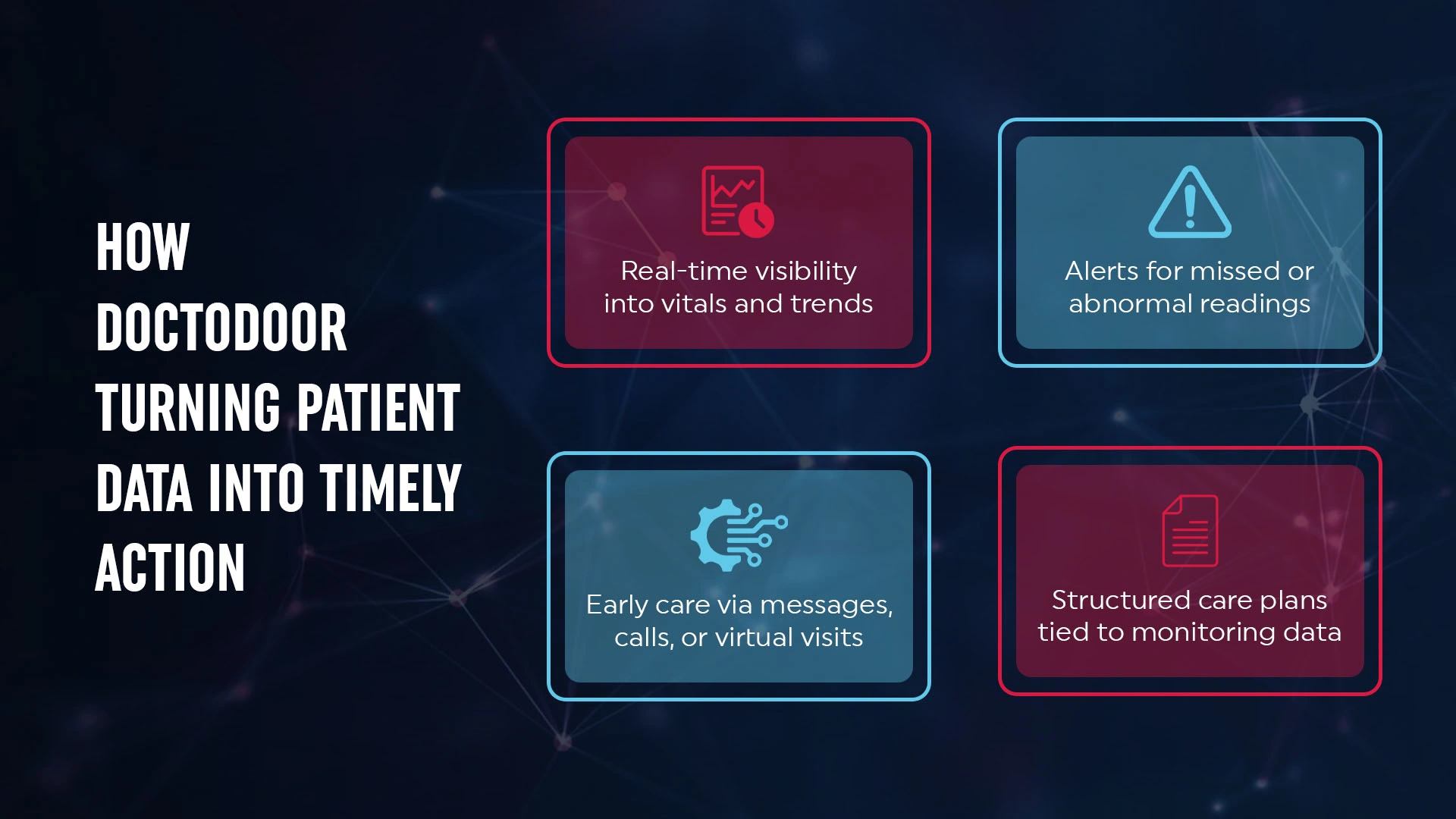
Turning Patient Data Into Timely Action
DocToDoor transforms patient data into meaningful clinical action by providing:
- Real-time visibility into vitals and trends
- Automated alerts for missed or abnormal readings
- Early intervention through messages, calls, or virtual visits
- Structured care plans tied to monitoring data
Reducing Administrative Burden and Supporting Billing
Administrative work can slow down virtual care programs. DocToDoor simplifies operations by offering:
- Automated compliance tracking
- Built-in time logging across web and mobile platforms
- Centralized patient management dashboards
- Documentation aligned with payer requirements
Closing the Loop on High-Risk Care
High-risk patients need continuous support and timely interventions. Virtual monitoring extends clinical care into the home, helping to close care gaps effectively.
With real-time data, automated engagement, and streamlined workflows, DocToDoor enables healthcare organizations to deliver safer, smarter, and more connected care at scale.
Frequently Asked Questions
What types of patients benefit most from virtual monitoring?
How does virtual monitoring reduce hospital readmissions?
Is remote patient monitoring difficult for patients to use?
How does DocToDoor support care teams and billing compliance?
Follow us on LinkedIn.