What Is Transitional Care Management (TCM)? The Complete Guide 2026
Learn how transitional care management helps healthcare providers improve post-discharge care, reduce readmissions, and increase reimbursement with DocToDoor.
Are you struggling with post-discharge follow-ups and missed reimbursement opportunities? Here's your detailed guide to discovering how transitional care management helps healthcare with DocToDoor.
Transitional care management is arguably the most significant post-discharge service in modern healthcare. Once the patient is discharged from the hospital, the process of recovery truly begins. New medications will have to be prescribed, appointments will need to be set, and minor issues can easily escalate to major problems without any supervision.
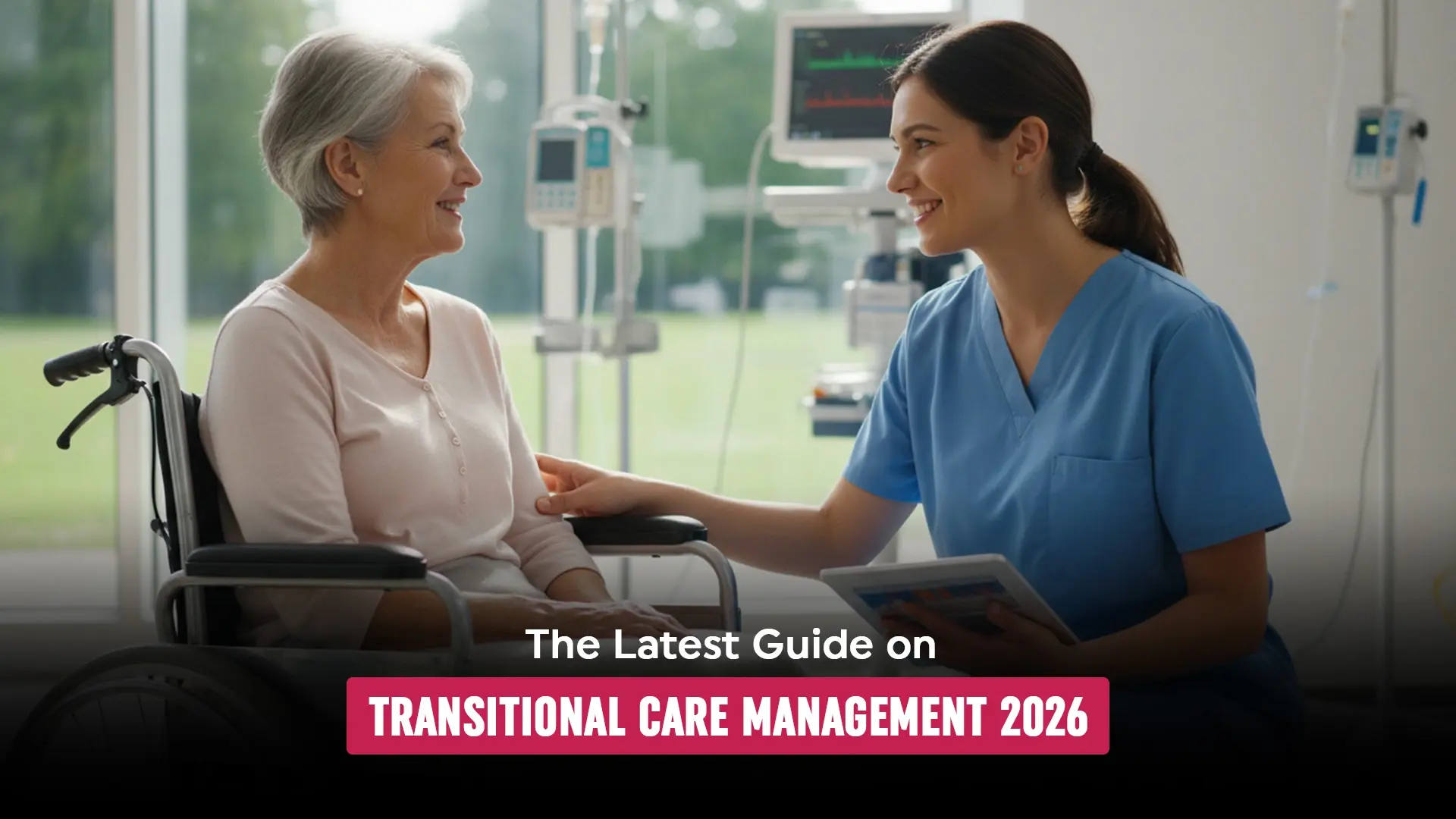
This is precisely the point where TCM comes into play. TCM assists healthcare facilities in navigating their patients through the initial 30 days following discharge via systematic follow-ups, medication checks, and coordination of care.
In simple terms, transitional care management is a Medicare-covered service that helps providers manage a patient's transition from hospital to home while improving continuity of care and reducing avoidable readmissions.
The Importance of Transitional Care Management
It seems logical that discharge from the hospital marks the end of a patient's journey, yet the truth is that it is usually the weakest point in terms of care quality. Patients go home burdened with newly prescribed medications, modified treatment programs, and uncertainties.
Post-discharge care becomes crucial for these patients since their failure to receive follow-ups results in missing their meds, misunderstanding discharge information, and postponing necessary consultations. Consequently, they may need to visit hospitals again in order to solve the problem.
From the provider's point of view, readmissions raise the cost of care, overload care providers, and put providers at financial risks due to potential readmission penalties. According to statistics, one in every five Medicare patients ends up going back to hospitals within 30 days of being discharged.
Here, a strong transitional care management program closes that gap by keeping patients engaged, informed, and supported after discharge.
Who Can Provide Transitional Care Management Services?
Not every care team member can bill for transitional care management, but several qualified professionals can provide and oversee these services under Medicare guidelines.
Primary Care Physicians
Transitional care management is frequently coordinated by primary care physicians as they usually take care of follow-up appointments and the monitoring of patients with chronic illnesses.
Nurse Practitioners
The key to providing care transition is nurse practitioners who facilitate follow-up consultations, medication review, patient education, and recognize early indicators before any complications arise.
Physician Assistants
Physician assistants may participate in providing care transition by taking care of follow-up consultations and discharge summary review, among other things.
Clinical Nurse Specialists
Clinical nurse specialists are also eligible to provide transitional care management services, particularly in complex cases that require close monitoring and care planning.
Home Health and Care Coordination Teams
Despite the fact that they may not necessarily provide billing services for care coordination, many home health and other support professionals are instrumental to successful care coordination and continuity efforts.
Transitional Care Management Services Requirements
In order to be eligible to provide transitional care management billing, the provider has to meet certain conditions set forth by the Medicare agency. These requirements are meant to guarantee the patient a smooth and systematic post-discharge experience.
Contact the Patient Within Two Business Days After Discharge
It is necessary to reach out to the patient within two days after discharge. This contact can be made by phone, video conferencing or with the assistance of a caregiver or another person.
Complete a Face-to-Face Visit
A face-to-face visit is required based on medical complexity. Moderate cases must be seen within 14 days, while high-complexity cases require a visit within 7 days.
Perform Medication Reconciliation
Medication reconciliation is a critical element of post-discharge care services. All medications need to be reviewed following discharge to detect changes, eliminate duplicate therapy, and minimize safety hazards.
Develop a Care Plan
A written care plan needs to be developed and retained. The plan should outline objectives for recovery, referrals to specialists, follow-ups, and other services required within 30 days.
Record Everything
Documentation is vital for compliance and reimbursement purposes. Documentation should include the discharge date, date of first contact, date of visit, medication review, and level of medical decision-making complexity.
Transitional Care Management CPT Codes
Medicare uses two CPT codes for transitional care management, based on the complexity of the patient's condition and the timing of follow-up care.
| CPT Code | Complexity | Face-to-Face Visit | Avg. Reimbursement |
|---|---|---|---|
| 99495 | Moderate | Within 14 days | $220+ |
| 99496 | High | Within 7 days | $298+ |
These codes help providers capture reimbursement for non-face-to-face work that often goes unpaid, including follow-up calls, coordination, and medication review.
Transitional Care Management Process
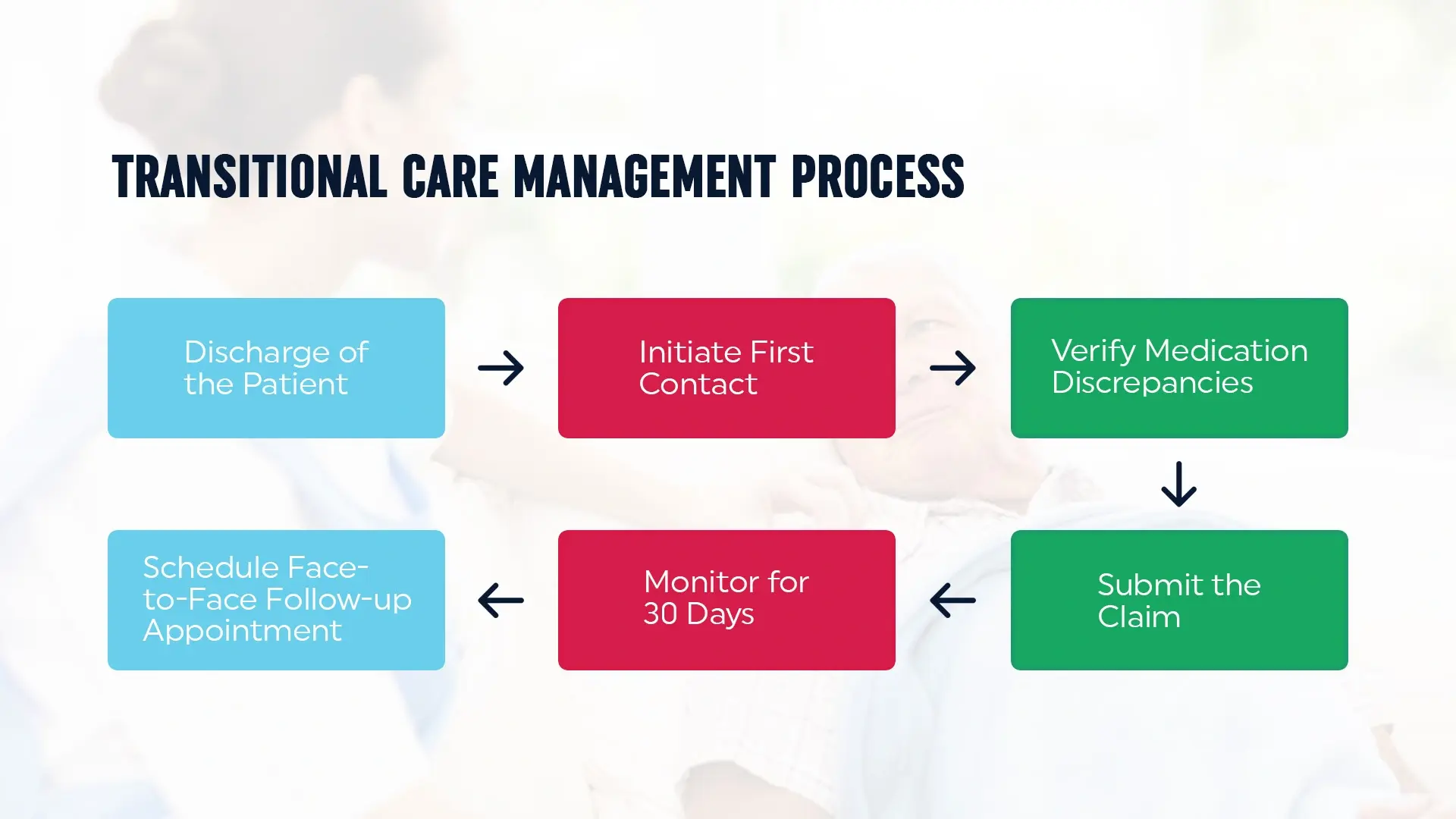
An effective transitional care management process adheres to the following sequential steps:
Step 1: Discharge of the Patient
This starts with the discharge of the patient from the hospital or other rehabilitation facility.
Step 2: Initiate First Contact
Within 48 business days after discharge, the clinic contacts the patient or caregiver to evaluate symptoms and address concerns.
Step 3: Verify Medication Discrepancies
Discharge medications are reviewed and reconciled, ensuring no clinical problems occur.
Step 4: Schedule Face-to-Face Follow-up Appointment
A timely follow-up appointment is made, whether face-to-face or an alternative.
Step 5: Monitor for 30 Days
The patient receives coordinated care during this period via communication and referral processes.
Step 6: Submit the Claim
After meeting all TCM criteria, the claim is filed using the appropriate CPT code.
How DocToDoor Simplifies Transitional Care Management
Managing transitional care management manually is difficult. Staff must track discharge dates, make timely calls, document every touchpoint, and stay compliant with CMS rules. That creates friction, missed deadlines, and lost revenue.
DocToDoor simplifies that entire process with an AI-powered workflow built for modern care coordination. Its platform helps clinics automate outreach, prioritize follow-ups, streamline medication reviews, and capture every billable TCM activity.
With DocToDoor, providers can:
- Automate 24-48 hour post-discharge outreach
- Improve on-time TCM call completion
- Reduce 30-day readmissions
- Simplify documentation for CPT 99495 and 99496
- Scale transitional care management without adding admin burden
For clinics, that means better patient outcomes, cleaner workflows, and stronger reimbursement performance.
Final Thoughts
Transitional care management is no longer optional in value-based healthcare. It is a practical, revenue-generating, and patient-centered way to improve recovery after discharge. For patients, it creates safer transitions and better support. For providers, it reduces readmissions, improves compliance, and strengthens reimbursement. As post-acute care becomes more complex in 2026, solutions like DocToDoor make it easier to deliver smarter, faster, and more reliable transitional care management at scale.