Transitional Care Management After a Heart Attack: A Guide to Safer Recovery
This blog explores how transitional care after a heart attack supports organised follow-up, medication review, symptom monitoring, risk identification, and care coordination after hospital discharge.
A heart attack may mark the end of a hospital stay, but it is not the end of the care journey. The first 30 days after discharge can be especially important, as patients may need continued support to follow their care plan, manage medications, and stay connected with their care team.

This is even more important after a heart attack, when patients may need medication checks, follow-up communication, symptom monitoring, and ongoing coordination with their care team.
Transitional care after a heart attack provides a structured way to manage these activities, ensuring nothing gets missed. It gives patients structured support and helps them receive appropriate follow-up care after returning home.
Why Does Recovery Need Support After a Heart Attack?
The period after discharge involves more than scheduling an appointment. Care teams may need to review medications, check symptoms, complete care-plan activities, and maintain communication with patients. These cannot be effectively done without an established process for following up on the tasks.
Post-heart attack care management becomes especially important in such cases. A structured approach keeps the focus on the activities that need to happen after discharge while keeping the care team connected.
What Is Transitional Care Management After a Heart Attack?
Transitional care management (TCM) helps patients stay supported during the critical period immediately after hospital discharge. For someone recovering from a heart attack, cardiac transitional care brings important follow-up steps together in one organised process instead of handling each task separately.
For example, a care team may contact the patient after discharge, review their medications, check for new or worsening symptoms, discuss the care plan, and identify any concerns that may require further attention. This structured method makes it easier for providers to keep track of post-discharge care after a heart attack and ensure the patient continues to receive the right support even at home.
Key Steps in Post-Heart Attack Care Management
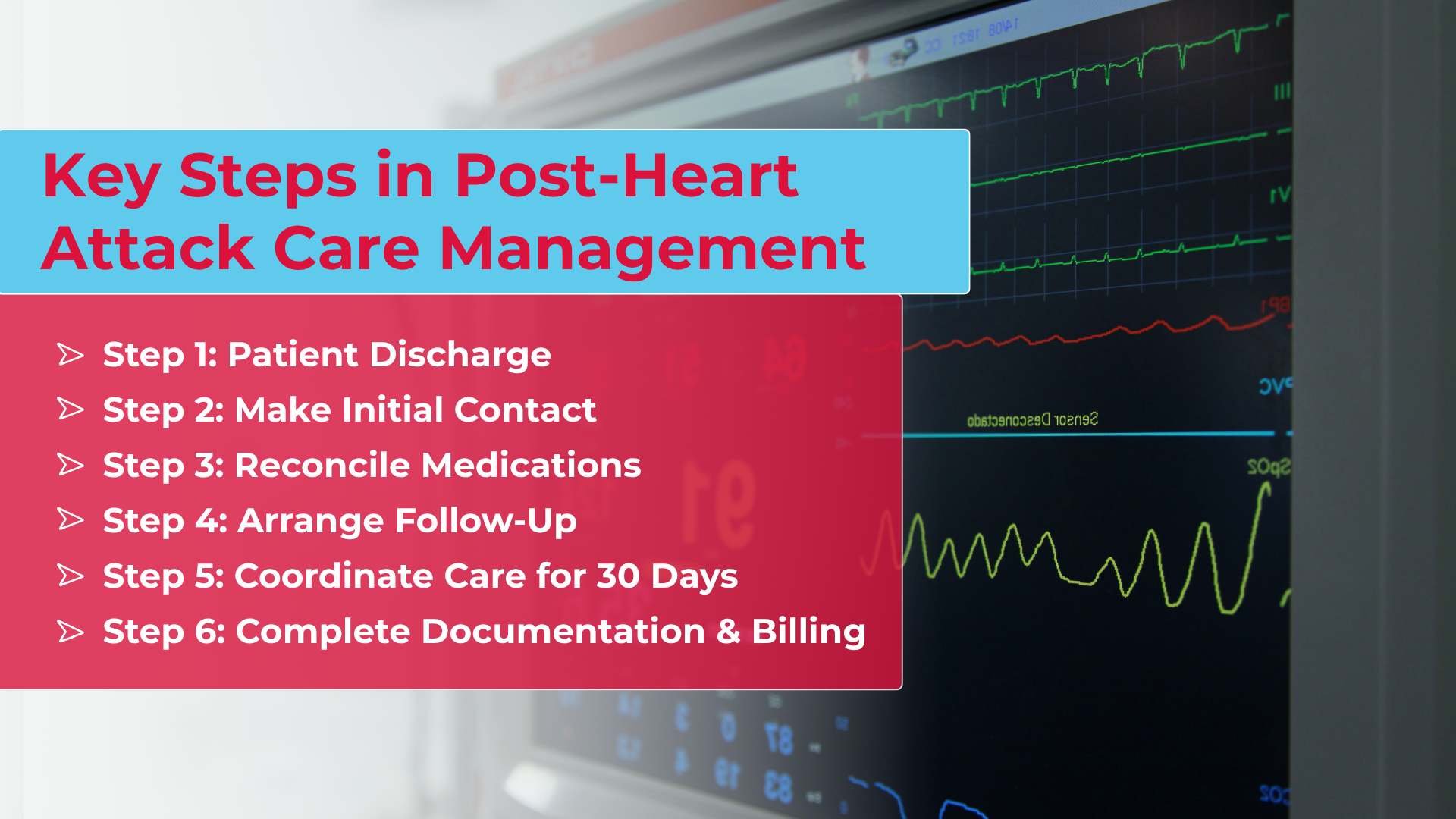
The transition from hospital to home involves more than a single follow-up call. A structured TCM process helps care teams manage key activities from discharge through the 30-day transition period.
Step 1: Patient Discharge
The process begins when the patient is discharged from the hospital or another eligible healthcare facility.
Step 2: Make Initial Contact
The platform schedules the initial patient contact during the first 48 hours after discharge, with AI-suggested questions to support the conversation.
Step 3: Reconcile Medications
The team reviews the patient's discharge medications, identifies discrepancies, and helps address medication-related concerns.
Step 4: Arrange Follow-Up
A timely, eligible telehealth follow-up is scheduled based on the patient's needs and the applicable TCM requirements.
Step 5: Coordinate Care for 30 Days
Throughout the 30-day period, the care team monitors progress, supports the care plan, coordinates referrals, and stays connected with the patient.
Step 6: Complete Documentation and Billing
Once the required TCM activities are completed, the provider can document the service and submit the appropriate claim based on the applicable requirements.
Together, these activities support heart attack follow-up care and provide a more consistent foundation for cardiac care management.
How Technology Can Support Cardiac Transitional Care
A digital TCM workflow gives care teams a single place to manage what needs to happen after discharge, from the first patient call to ongoing follow-up.
- Automatic enrollment: An ADT/EHR event can start the TCM process automatically when a patient is discharged, so follow-up does not get missed.
- Proactive engagement: The platform schedules the initial contact within the first 48 hours and supports automated follow-up through text, email, or IVR.
- Prioritized tasks: An AI-driven task engine helps teams see which calls, medication reviews, or care-plan activities need attention first.
- Risk alerts: Clinical rules can flag patients trending toward readmission, helping care teams identify who may need closer attention.
- Single workflow: Calls, pending tasks, and patient interactions can all be managed in a single workflow for teams to know what has been done and what remains to do.
- EHR integration: Patient notes, med changes, and visit results can be recorded back in the patient chart for easy documentation of everything.
- Secure records: HIPAA-secure workflows and audit trails help teams manage patient information responsibly while keeping a clear record of TCM activities.
How DocToDoor Supports Transitional Care Management for Cardiac Patients
Leaving the hospital should never mean leaving a patient to figure out recovery alone.
At DocToDoor, we help care teams keep heart attack recovery care organised, from early follow-ups to medication reviews and ongoing patient communication.
Our digital workflows bring key tasks together, helping teams maintain timely care coordination after a heart attack without losing track of important follow-up steps.
With structured outreach, task tracking, risk alerts, and EHR integration, DocToDoor supports a smoother transition from hospital to home.
The Bottom Line
Effective care coordination after heart attack requires more than a follow-up call. Healthcare providers need a clear workflow to manage outreach, medications, symptoms, risks, and ongoing communication.
At DocToDoor, we help make this process easier with AI-powered task management, smart patient outreach, risk flags, and EHR integration. Schedule a demo to learn more and discover smart ways for better connected patient care.