RPM for Specialty Care: Best Practices for Cardiology, Pulmonology, and Diabetes Clinics
Best Practices for Cardiology, Pulmonology, and Diabetes Clinics
Clinical practice has evolved dramatically in recent years. Whether through technological advancements or the introduction of new medicines, the healthcare industry has experienced a significant transformation. One of the most impactful developments is the introduction of Remote Patient Monitoring (RPM).
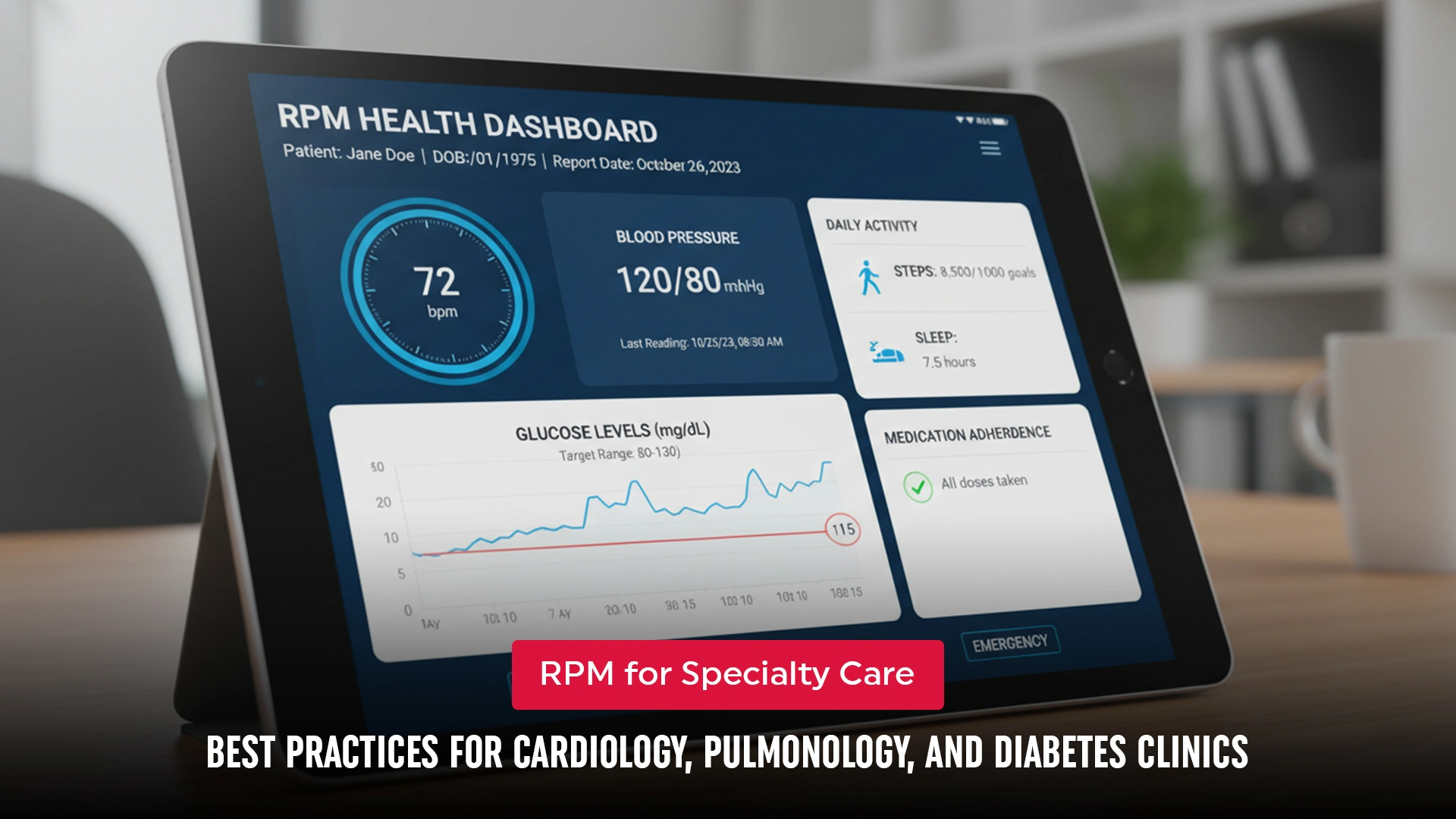
RPM systems are designed primarily for patients with chronic conditions. This technology enables continuous monitoring and real-time data updates, allowing healthcare professionals to track their patients’ conditions while they are at home or in remote locations.
Read this blog to understand why RPM should be adopted by healthcare centres and clinics to provide patients with high-quality, proactive care.
Importance of Remote Patient Monitoring
Remote patient monitoring systems are developed to track the health status of patients with various chronic conditions and provide clinicians with accurate, timely data. These systems support patients in managing their conditions more effectively by enabling expert guidance and intervention when necessary.
RPM also allows patients to receive personalized and timely care without frequent clinic visits or unnecessary hospital admissions, improving both convenience and clinical outcomes.
Why RPM Matters in Specialty Care
Specialty clinics often manage patients with complex, long-term conditions that require close observation. Traditional care models rely heavily on scheduled appointments, which may not capture subtle health changes between visits.
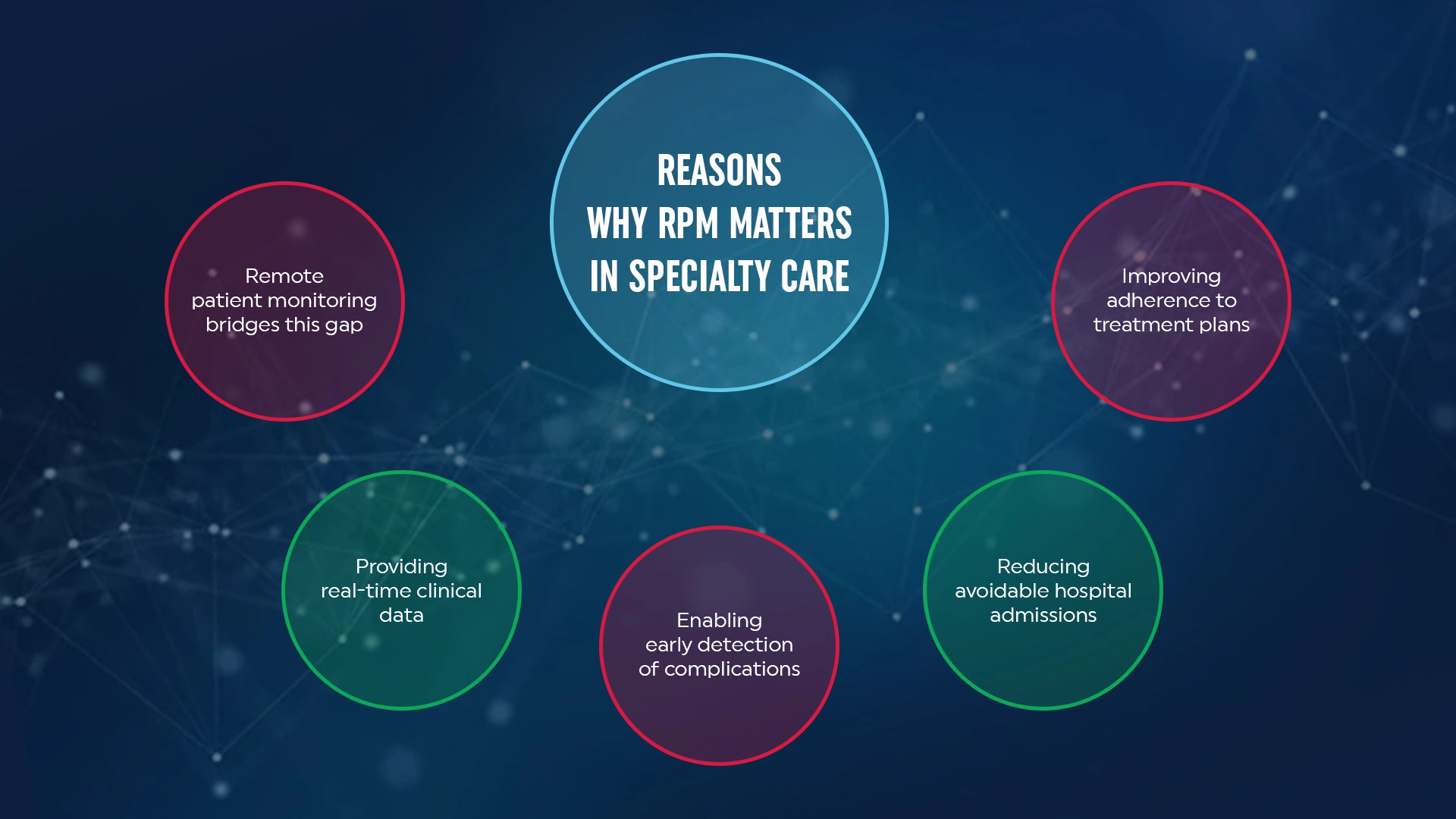
Remote patient monitoring bridges this gap by:
- Providing real-time clinical data
- Enabling early detection of complications
- Reducing avoidable hospital admissions
- Improving adherence to treatment plans
Cardiology: Preventing Complications Through Early Detection
Cardiac patients need consistent monitoring of vital indicators. Even small changes can lead to serious complications. RPM helps care teams track:
- Blood pressure trends over time
- Heart rate and rhythm irregularities
- Sudden weight gain linked to fluid retention
- Post-procedure recovery metrics
This continuous insight allows providers to adjust medications, provide timely guidance, and help prevent avoidable hospital readmissions. More importantly, it reassures patients that they are supported between visits and not managing their condition alone.
Pulmonology: Managing Respiratory Stability Proactively
For patients with asthma, COPD, or other chronic respiratory conditions, stability can change quickly due to environmental triggers or infections. RPM supports pulmonology teams by enabling regular monitoring of:
- Oxygen saturation levels
- Respiratory rate trends
- Symptom progression reports
With clear review protocols in place, clinicians can identify early signs of worsening symptoms and intervene before emergency care becomes necessary. This proactive approach improves patient safety and reduces pressure on acute care services.
Diabetes Care: Improving Long-Term Glycaemic Control
Diabetes management depends on consistent glucose monitoring and trend analysis. In-clinic readings provide only limited snapshots, while RPM offers a broader view of daily fluctuations.
By reviewing glucose patterns, clinicians can:
- Detect recurring spikes or hypoglycaemic episodes
- Adjust medication regimens more effectively
- Provide targeted lifestyle guidance
- Encourage stronger patient accountability
This data-driven approach supports improved glycaemic control and helps reduce the risk of long-term complications.
Implementing RPM Successfully in Specialty Clinics
RPM technology is powerful, but results depend on how it is implemented. Clinics need clear patient eligibility criteria, defined monitoring thresholds, and a simple process for reviewing incoming data. Staff training and patient guidance also matter to ensure devices are used properly and readings are meaningful.
When set up correctly, RPM improves efficiency instead of adding extra work. It strengthens communication between care teams and patients while supporting compliance and reimbursement requirements.
At DocToDoor, we go beyond simply supplying devices. We bring AI-supported monitoring, CMS-aligned workflows, real-time device integration, and structured hypertension programs together in one platform. Our dashboard makes it easy to view patient data, track billing compliance, and capture care management time without switching systems.
We also support flexible deployment options, including cellular devices that do not require a smartphone, Bluetooth-enabled app connectivity, and shared-device models for nursing homes. The goal is simple: create a connected care environment that supports confident clinical decisions and keeps patients engaged between visits.
Interested in learning more about our RPM system? Book a demo today.