Role of Chronic Care Management: How It Improves Outcomes for High-Risk Patients
Chronic care management transforms high-risk patient care through continuous support, early intervention, and real-time monitoring, reducing hospital visits, improving outcomes, and empowering patients to take control of their health.
When 70-year-old David enrolled in his clinic’s care program, managing his diabetes and COPD felt overwhelming. He often missed medications, struggled with lifestyle changes, and frequently ended up in the emergency room. But within a few months of regular check-ins and guided support, his condition stabilized. His vitals improved, hospital visits reduced, and most importantly, he felt more in control.
“I finally feel like someone is looking out for me between visits,” he shared.
David’s experience reflects a broader shift in healthcare. For high-risk patients, chronic care management is transforming how long-term conditions are handled, like moving from reactive treatment to continuous, proactive care.
What Makes Chronic Care Management So Effective?
At its core, chronic care management focuses on closing the gaps between appointments. Chronic diseases don’t worsen overnight. They progress gradually due to missed warning signs, poor adherence, or lack of timely intervention. Continuous engagement changes that dynamic.
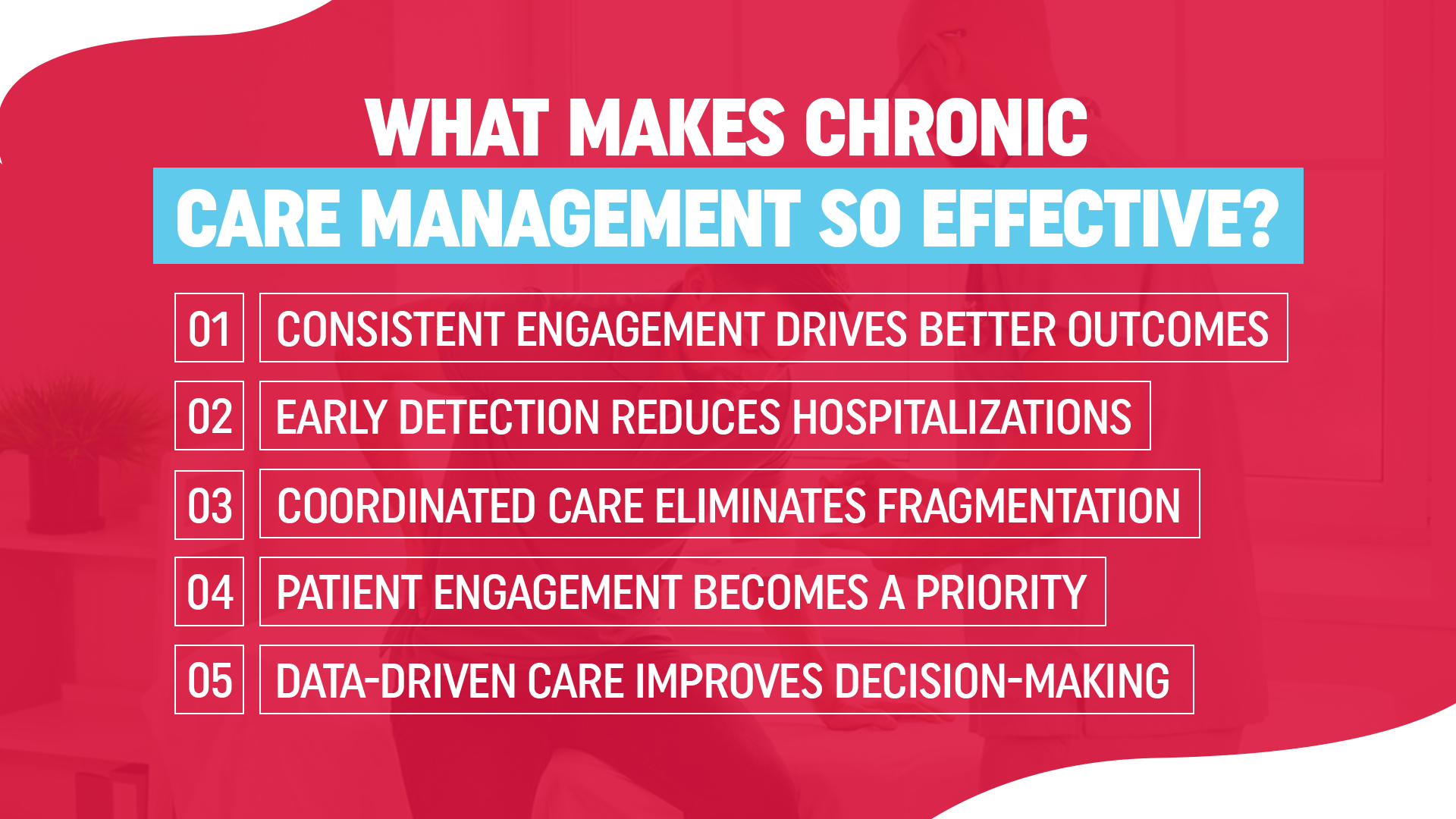
1. Consistent engagement drives better outcomes
Instead of relying on occasional visits, patients receive ongoing support through structured monthly interactions. These touchpoints ensure medications are taken correctly, symptoms are addressed early, and patients stay committed to their care plans. Over time, this consistency significantly improves health stability.
2. Early detection reduces hospitalizations
With remote chronic care management, providers can monitor patient data such as vitals, symptoms, and adherence in real time. This acts as an early warning system. Small changes are identified quickly, allowing care teams to intervene before conditions escalate, resulting in fewer emergency visits and hospital admissions.
3. Coordinated care eliminates fragmentation
High-risk patients often see multiple specialists, which can lead to confusion and conflicting treatments. Structured chronic care management services create a unified care plan accessible to the entire care team. This improves communication, reduces errors, and ensures every decision aligns with the patient’s overall health goals.
4. Patient engagement becomes a priority
One of the biggest challenges in managing chronic conditions is maintaining patient involvement. Through chronic care management services, patients receive reminders, education, and regular follow-ups. This ongoing interaction encourages accountability and helps patients stay consistent with medications and lifestyle changes.
5. Data-driven care improves decision-making
Another key advantage of remote chronic care management is access to real-time patient data. Clinicians can track progress, adjust care plans, and make informed decisions based on actual trends rather than occasional check-ups. This leads to more accurate and personalized care.
A Smarter Approach to Managing Chronic Conditions
For healthcare providers, delivering consistent and effective care to high-risk patients requires the right tools and systems. This is where modern solutions are making a difference.
Platforms like DocToDoor enable seamless chronic care management by combining structured care planning, real-time data integration, and proactive patient engagement into one unified system. We offer special features like automated time tracking, secure communication, and integrated device monitoring. Providers can now deliver efficient and compliant chronic care management services while improving patient outcomes.
By simplifying workflows and enabling continuous care, such solutions help reduce hospitalizations, enhance patient satisfaction, and create a more sustainable care model for both providers and patients. Want to witness the difference? Book a demo today!