A Complete Guide to Remote Patient Monitoring for Pregnancy Care: Consistent Support Before Delivery
As high-risk pregnancies and complex maternal health conditions become more common, pregnancy care is no longer limited to scheduled prenatal appointments. Learn how remote patient monitoring helps care teams track vitals, detect complications early, and deliver proactive prenatal support before delivery.
As high-risk pregnancies and complex maternal health conditions become more common, pregnancy care is no longer limited to scheduled prenatal appointments. Many pregnancy-related complications develop gradually, especially as the expected delivery date approaches. Relying only on clinic visits and occasional in-person assessments can delay the identification of potential health risks.
Remote patient monitoring (RPM) apps and connected medical devices help healthcare professionals access vital health data from expectant mothers without requiring frequent clinic visits. Care teams can continuously monitor key health metrics, identify early warning signs, and intervene before minor concerns develop into serious complications.
Today, hospitals, obstetric clinics, and maternal health programs are increasingly adopting remote patient monitoring technology to improve patient outcomes while managing growing patient volumes more efficiently. Combined with telehealth and connected medical devices, a remote patient monitoring app for pregnancy care automates clinical workflows and supports proactive prenatal care without adding unnecessary administrative burden.
Why Is Remote Patient Monitoring Essential for Pregnancy Care?
Regular prenatal check-ups remain essential because they allow healthcare professionals to perform comprehensive assessments, evaluate maternal and fetal health, and discuss any potential concerns. However, complications can arise between appointments, and it is not always practical for pregnant women to visit a healthcare facility whenever symptoms appear.
Remote patient monitoring bridges this gap by continuously collecting patient-generated health data and securely sharing it with care teams in real time. Healthcare providers can monitor changes in blood pressure, weight, heart rate, blood glucose levels, and other vital signs that might otherwise go unnoticed between scheduled visits.
With a remote patient monitoring platform for pregnancy monitoring, healthcare professionals can track:
- Blood pressure to identify early signs of gestational hypertension or preeclampsia
- Blood glucose levels for patients with gestational diabetes
- Weight trends throughout pregnancy
- Heart rate and other connected vital signs
- Patient-reported symptoms through digital questionnaires
- Medication adherence and care plan compliance
Using RPM platforms and connected medical devices, care teams receive timely patient data that supports faster clinical decision-making without waiting for the next scheduled appointment. This enables earlier intervention, reduces avoidable emergency visits, and strengthens communication between patients and healthcare providers.
Who Can Benefit from Remote Patient Monitoring for Pregnancy Care?
While remote patient monitoring for pregnancy care can benefit most expectant mothers, it is particularly valuable for high-risk pregnancies that require closer observation and ongoing clinical oversight.
Healthcare professionals commonly recommend pregnancy RPM programs for patients with:
- Chronic hypertension
- Gestational hypertension
- Gestational diabetes
- Previous high-risk pregnancies
- Multiple pregnancies, such as twins or triplets
- Obesity or increased cardiovascular risk
- Advanced maternal age
- Limited access to specialist maternity services
Understanding the Clinical Benefits of Remote Patient Monitoring for Pregnancy Care
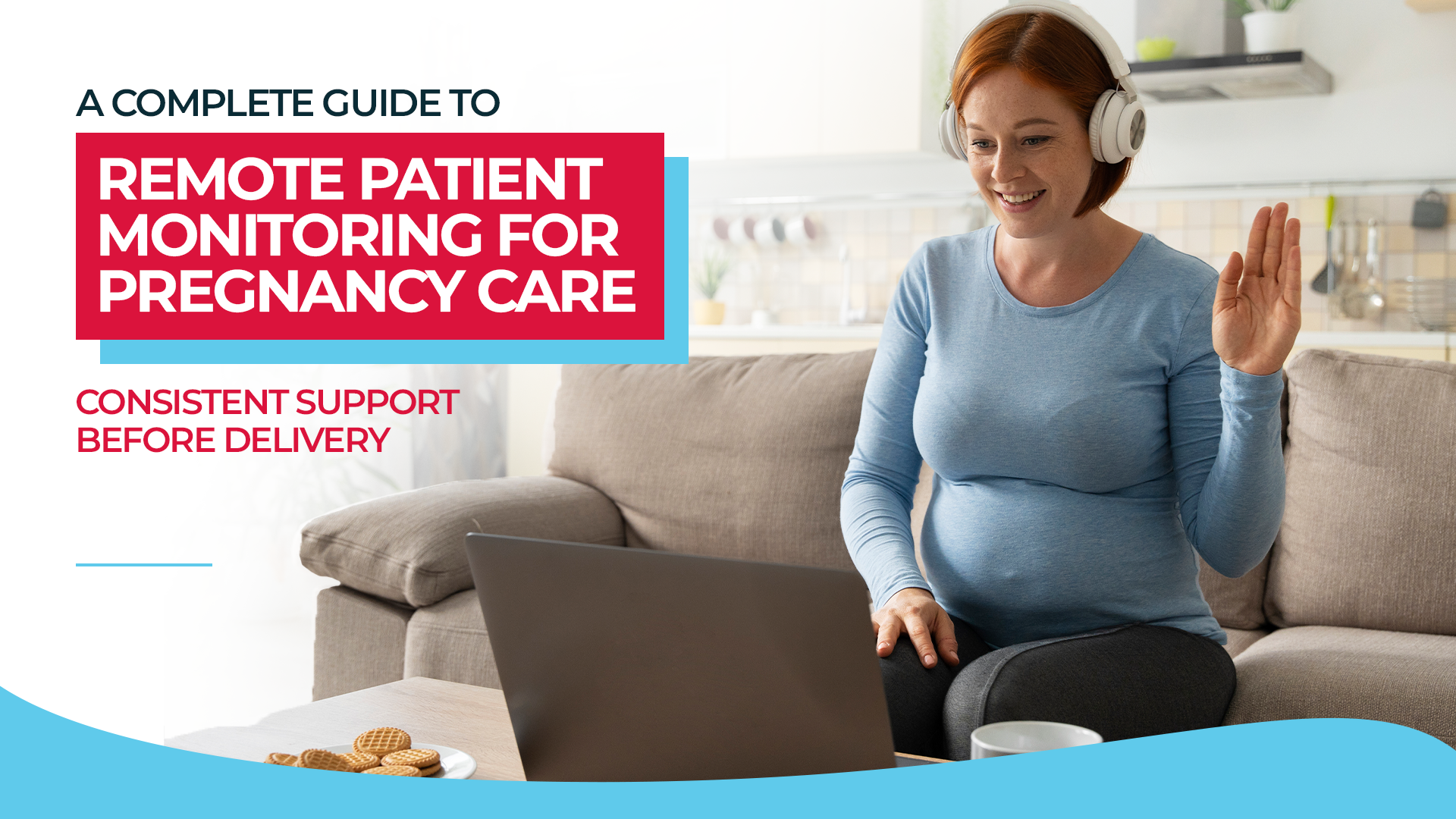
Healthcare organizations continue to invest in RPM solutions because they improve both clinical outcomes and operational efficiency. Some of the key benefits include:
Early Detection of Pregnancy Complications
Continuous monitoring enables care teams to identify abnormal health trends early and take action before symptoms become more severe. This supports timely intervention for conditions such as gestational hypertension and gestational diabetes.
Improved Patient Engagement
Patients become more involved in their care by regularly recording health data and following personalized care plans. Continuous monitoring also helps expectant mothers stay informed about changes in their health and encourages better adherence to treatment recommendations.
Continuity of Care Between Appointments
Instead of relying solely on monthly or biweekly prenatal visits, healthcare providers can maintain continuous visibility into a patient's health throughout pregnancy, allowing for more proactive care.
Fewer Unnecessary Clinic Visits and Hospital Admissions
Timely intervention can help reduce avoidable emergency department visits, unnecessary clinic appointments, and hospital admissions while ensuring patients receive appropriate care whenever it is needed.
Better Care Coordination Across Clinical Teams
Obstetricians, nurses, care coordinators, and primary care providers can access the same patient information in real time, improving collaboration and supporting more coordinated, patient-centred pregnancy care.
What Should Healthcare Providers Consider Before Launching a Pregnancy RPM Program?
Successfully implementing a pregnancy RPM program involves much more than simply distributing connected devices. Healthcare organizations should carefully evaluate whether the platform supports both their clinical workflows and operational requirements.
Key considerations include:
- Easy patient onboarding with minimal technical barriers
- Support for Bluetooth and cellular-enabled medical devices
- Automated patient reminders and engagement tools
- Real-time alerts for abnormal vital signs
- Secure patient data management
- Seamless integration with existing clinical workflows
- CMS-compliant remote patient monitoring workflows
- Comprehensive reporting and billing support
- Scalable deployment across multiple care settings
Choosing the right RPM platform directly influences clinician adoption, patient engagement, and the long-term success of the program.
How DocToDoor Supports Modern Pregnancy Monitoring Programs
Healthcare providers need more than connected devices. They need an RPM platform that simplifies clinical operations while helping care teams deliver consistent, high-quality patient care.
DocToDoor provides an AI-powered remote patient monitoring software solution designed for hospitals, clinics, and healthcare organizations looking to scale virtual care programs.
Our platform offers flexible deployment options, allowing healthcare providers to support different patient populations without disrupting existing clinical workflows.
Key features include:
- AI-powered remote patient monitoring platform
- White-label RPM solution for healthcare organizations
- Telehealth remote patient monitoring app
- Bluetooth, cellular, and wearable device integration
- Compatibility with Apple Health and Google Fit devices
- Real-time patient data visualization dashboard
- Automated compliance tracking
- CMS-compliant RPM billing workflow support
- Care management time tracking
- Flexible deployment for home monitoring and facility-based care
Our platform supports providers throughout every stage of the RPM journey, from patient onboarding and enrollment to care plan assignment, automated engagement, ongoing monitoring, reporting, and billing.
This streamlined workflow reduces administrative burden while giving clinicians continuous access to meaningful patient data that supports faster, more informed clinical decision-making.
Choosing the Right RPM Strategy for Your Organization
Every healthcare organization has unique operational goals, patient populations, and technology requirements. Before selecting a remote patient monitoring solution, decision-makers should evaluate whether the platform can support long-term program growth rather than simply addressing immediate monitoring needs.
Ask these questions before implementation:
- Can the platform scale across multiple specialties beyond pregnancy care?
- Does it integrate with a wide range of connected medical devices?
- Can clinicians easily review patient trends in real time?
- Does it simplify CMS billing and documentation?
- Is patient onboarding straightforward for patients with varying levels of digital literacy?
- Can it support both smartphone-based and cellular-enabled device monitoring?
Selecting a flexible RPM platform allows healthcare organizations to expand virtual care services in the future without replacing their existing infrastructure.
Final Thoughts
A remote patient monitoring app designed for pregnancy care is transforming prenatal healthcare by giving providers continuous visibility into maternal health outside traditional clinic visits. Through earlier identification of complications, stronger patient engagement, improved care coordination, and greater operational efficiency, RPM has become an increasingly valuable investment for hospitals, clinics, and maternal health programs.
For healthcare organizations looking to build or expand pregnancy monitoring programs, DocToDoor offers a scalable, AI-powered remote patient monitoring platform that supports connected devices, real-time monitoring, CMS-compliant workflows, and seamless care management.
Book a demo today or visit our website to discover how DocToDoor's remote patient monitoring solution can help your organization deliver safer, smarter, and more connected prenatal care.