Remote Patient Monitoring Guide: Common Mistakes Clinics Should Avoid
Learn where RPM programs go wrong-and what to do instead-so patients stay engaged and your team stays efficient.
For many clinics, launching a Remote Patient Monitoring (RPM) program begins with high expectations like better patient outcomes, improved efficiency, and a new revenue stream. But the reality often looks very different. In many cases, patient data stops coming in consistently and staff feel overwhelmed. Billing becomes confusing. And the worst part? Patient engagement drops off within weeks.
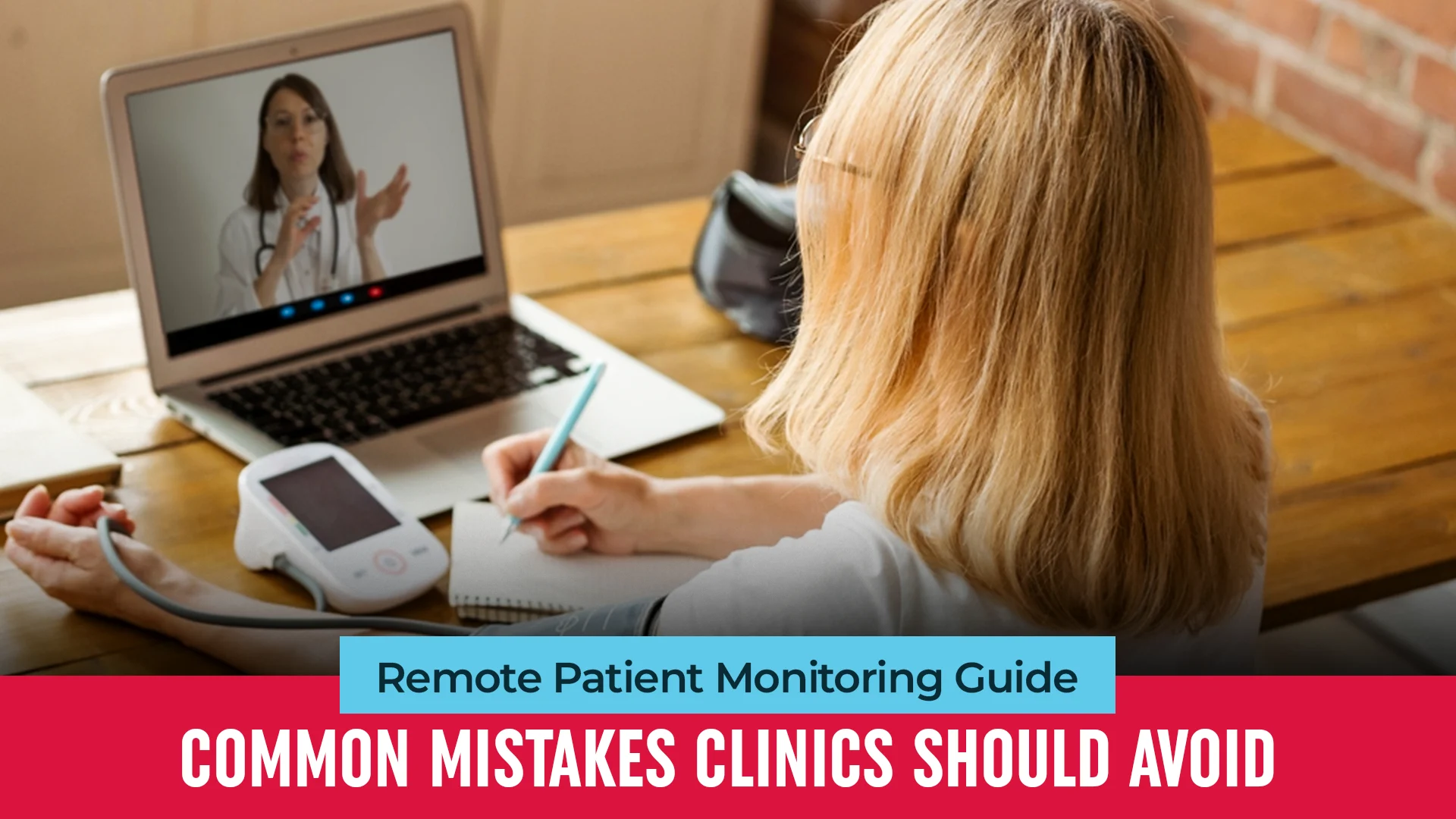
If this sounds familiar, you’re not alone. The issue isn’t RPM itself but it’s how it’s implemented. Without the right strategy, even the best remote patient monitoring applications can fall short.
Let’s explore where clinics go wrong and what they should be doing instead.
When Technology Becomes a Barrier Instead of an Enabler
One of the most overlooked challenges in RPM adoption is assuming that technology automatically improves care. In reality, poorly chosen tools can create more friction than value.
Many clinics adopt platforms that require patients to download apps, manage Bluetooth connections, or frequently troubleshoot devices. While this may work for younger, tech-savvy users, it creates a serious barrier for elderly patients or those with limited digital literacy. Over time, this friction leads to inconsistent data collection and eventual disengagement.
The real solution lies in flexibility. Clinics need RPM systems that adapt to patients. Whether it’s cellular-enabled devices that work without smartphones or simplified interfaces, accessibility directly impacts program success.
The Hidden Cost of Weak Patient Onboarding
RPM is not a “plug-and-play” solution. Yet many clinics treat it that way.
Patients are often handed devices with minimal instruction and expected to figure things out on their own. This leads to confusion around when to take readings, how to use the device, or why consistent monitoring even matters.
What follows is predictable: missed readings, poor adherence, and unreliable data.
When patients clearly understand how RPM fits into their care journey, they are far more likely to stay engaged and compliant.
Data Without Direction: The Problem with Unstructured Care
Collecting patient data is easy. Knowing what to do with it is where many clinics struggle.
Without a structured care plan, RPM data becomes overwhelming rather than useful. Clinicians may receive continuous streams of readings but lack clear thresholds, goals, or triggers for intervention. This can delay critical decisions and reduce the clinical value of the program.
Remote patient monitoring devices work best when data is tied to a purpose. Defined baselines, alert thresholds, and personalized care plans turn raw numbers into meaningful insights, enabling timely and effective care.
Why Workflow Integration Is Often an Afterthought
Another common mistake is treating RPM as an “extra” responsibility instead of embedding it into existing clinical workflows.
When systems are not integrated, staff are forced to juggle multiple platforms, manually track patient data, and spend extra time on reporting. This not only reduces efficiency but also increases the risk of errors and burnout.
A successful RPM program should feel like a natural extension of daily operations. Automation, centralized dashboards, and streamlined communication tools are essential to making RPM sustainable for clinical teams.
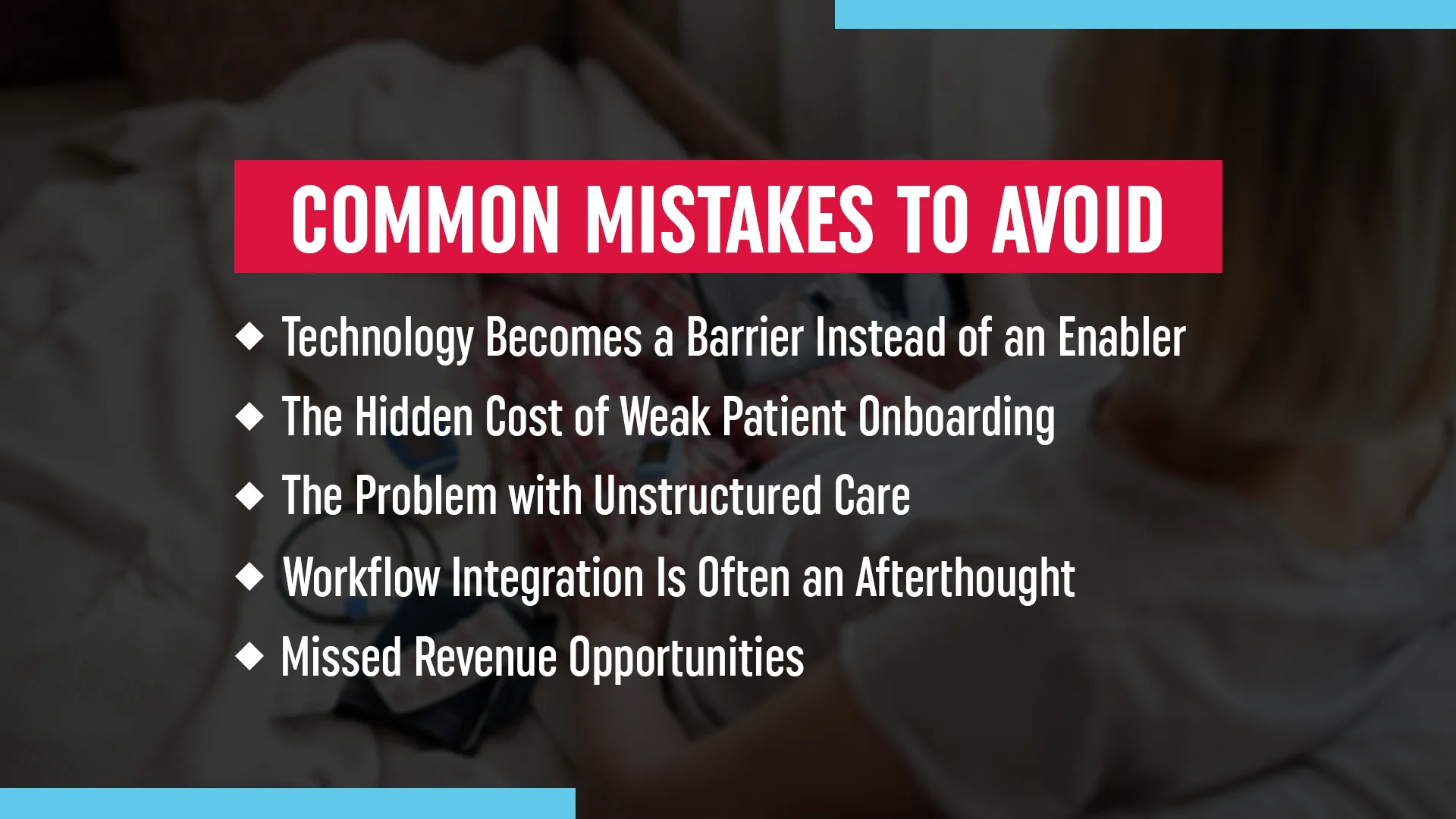
Missed Revenue Opportunities Due to Billing Confusion
While RPM offers strong reimbursement potential, many clinics fail to fully capitalize on it.
The complexity of CMS guidelines and CPT codes often leads to underbilling or compliance issues. In some cases, clinics abandon RPM altogether because they don’t see the expected financial return.
Understanding the reimbursement structure and using systems that simplify reporting can make a significant difference. When billing is handled correctly, RPM becomes not just a clinical asset but a financially viable one as well.
Transforming RPM Challenges into Opportunities with DocToDoor
The difference between a struggling RPM program and a successful one often comes down to the platform behind it.
DocToDoor has been designed with these real-world challenges in mind. Its advanced remote patient monitoring applications combine flexibility, clinical intelligence, and ease of use, ensuring that both patients and providers benefit from the system.
From cellular-based solutions that remove technology barriers to intelligent care plan management and automated billing support, we simplify every stage of RPM implementation. Its seamless integration into clinical workflows and focus on accurate, real-time data empowers providers to deliver more proactive and personalized care.
For clinics looking to avoid common pitfalls and unlock the full potential of remote patient monitoring (RPM) devices, DocToDoor offers a practical, scalable, and results-driven solution. Book a demo today!