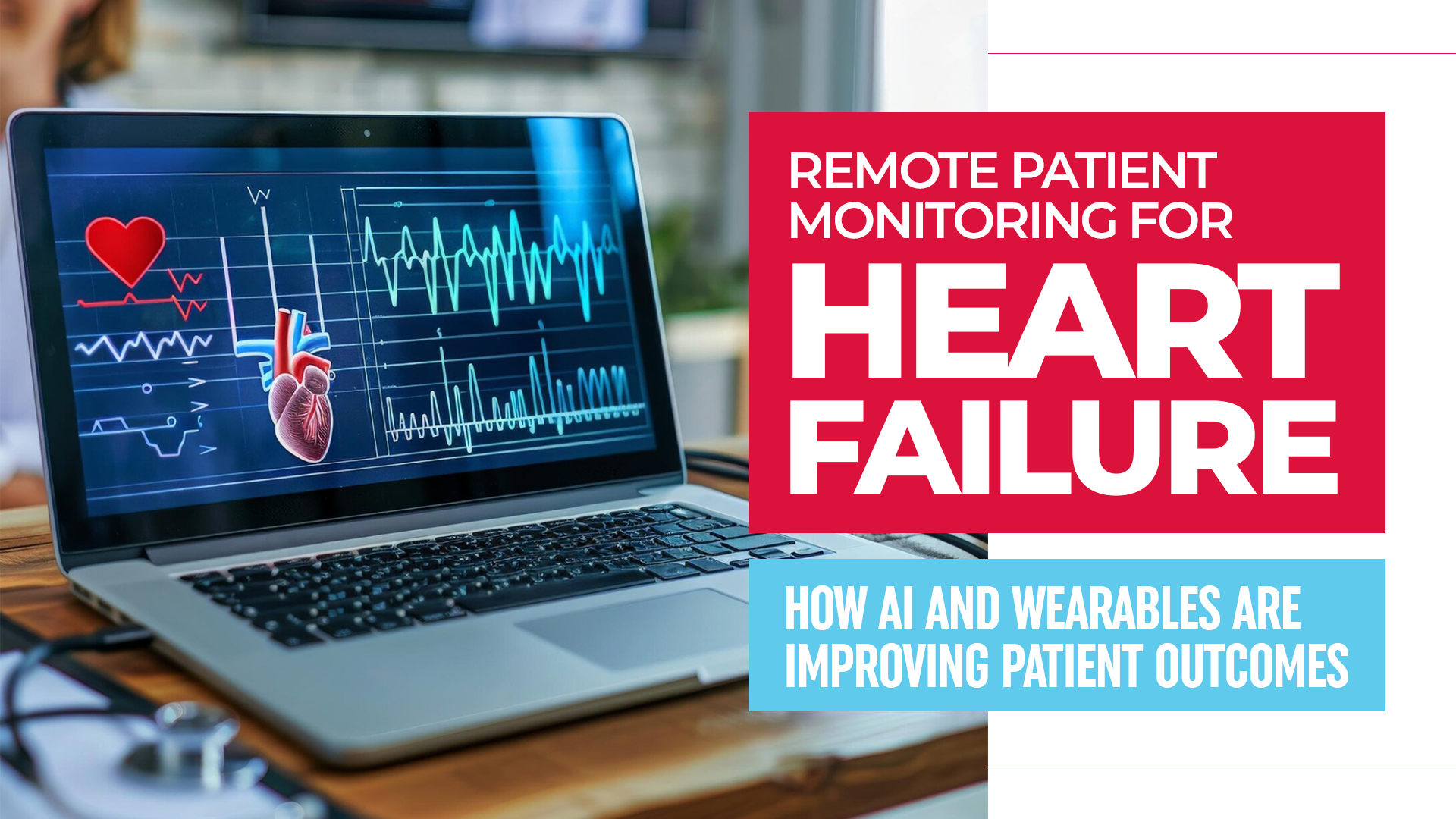
Remote Patient Monitoring for Heart Failure: How AI and Wearables Are Improving Patient Outcomes
Heart failure care requires continuous monitoring beyond routine clinic visits. Learn how AI, wearables, and remote patient monitoring with DocToDoor are helping healthcare teams track patient data and support better care.
Managing heart failure often requires ongoing monitoring, but frequent in-person visits can make it difficult for healthcare teams to track changes between appointments. Patients may experience changes in heart rate, blood pressure, weight, or symptoms at home without their care team seeing that information in real time. Remote patient monitoring for heart failure gives providers a way to collect relevant patient data outside the clinic and incorporate it into ongoing care.
What is remote patient monitoring for heart failure?
Remote patient monitoring for heart failure uses connected medical devices and digital technology to collect patient health information outside a clinical setting and transmit it to healthcare professionals. Depending on the monitoring program, this may include measurements such as blood pressure, weight, oxygen saturation, and other physiological data.
For people living with heart failure, RPM can give clinicians a broader view of changes in a patient's health between appointments.
How can wearables support heart failure monitoring?
Wearable devices and connected health monitors can collect health information while patients remain at home. Smartwatches, connected blood pressure monitors, digital scales, and other devices can contribute data to a remote monitoring program, depending on their capabilities and clinical use.
At DocToDoor, we integrate our Heart Rate Monitoring App with several supported devices, including:
- Blood pressure monitors, BodyTrace scales, Apple Watch, Fitbit, and other compatible devices.
Our platform can bring data from supported devices into a monitoring workflow, allowing healthcare professionals to review patient information remotely.
How can AI improve remote patient monitoring for heart failure?
AI is becoming increasingly relevant to cardiovascular care. The American Heart Association reports that AI is being explored across areas including wearable and implantable technologies, ECG interpretation, imaging, and patient monitoring. However, AI-enabled healthcare tools still require appropriate evaluation for reliability, safety, fairness, and effectiveness.
In an RPM environment, AI can potentially help healthcare organizations process large amounts of patient data, identify patterns, and support monitoring workflows. It should complement clinical decision-making rather than replace healthcare professionals.
What health information can be monitored remotely?
The information collected depends on the devices and clinical program being used. Common RPM measurements can include:
- Blood pressure
- Weight
- Oxygen saturation
- Blood glucose
- Other physiological measurements supported by connected medical devices
Patients may also report symptoms through digital platforms. CMS describes RPM as involving connected devices that transmit health data to providers, who can then use that information to manage a patient's condition.
What features should a heart failure RPM platform provide?
A useful RPM platform needs to connect patient monitoring with practical clinical workflows. DocToDoor's Heart Rate Monitoring App includes features such as customizable monitoring goals, threshold-based alerts, symptom tracking, patient education, nutrition management, clinical documentation, care planning, and secure provider-patient communication.
These capabilities can help clinical teams organize patient information and maintain communication as monitoring continues.
How does DocToDoor support remote patient monitoring for heart failure?
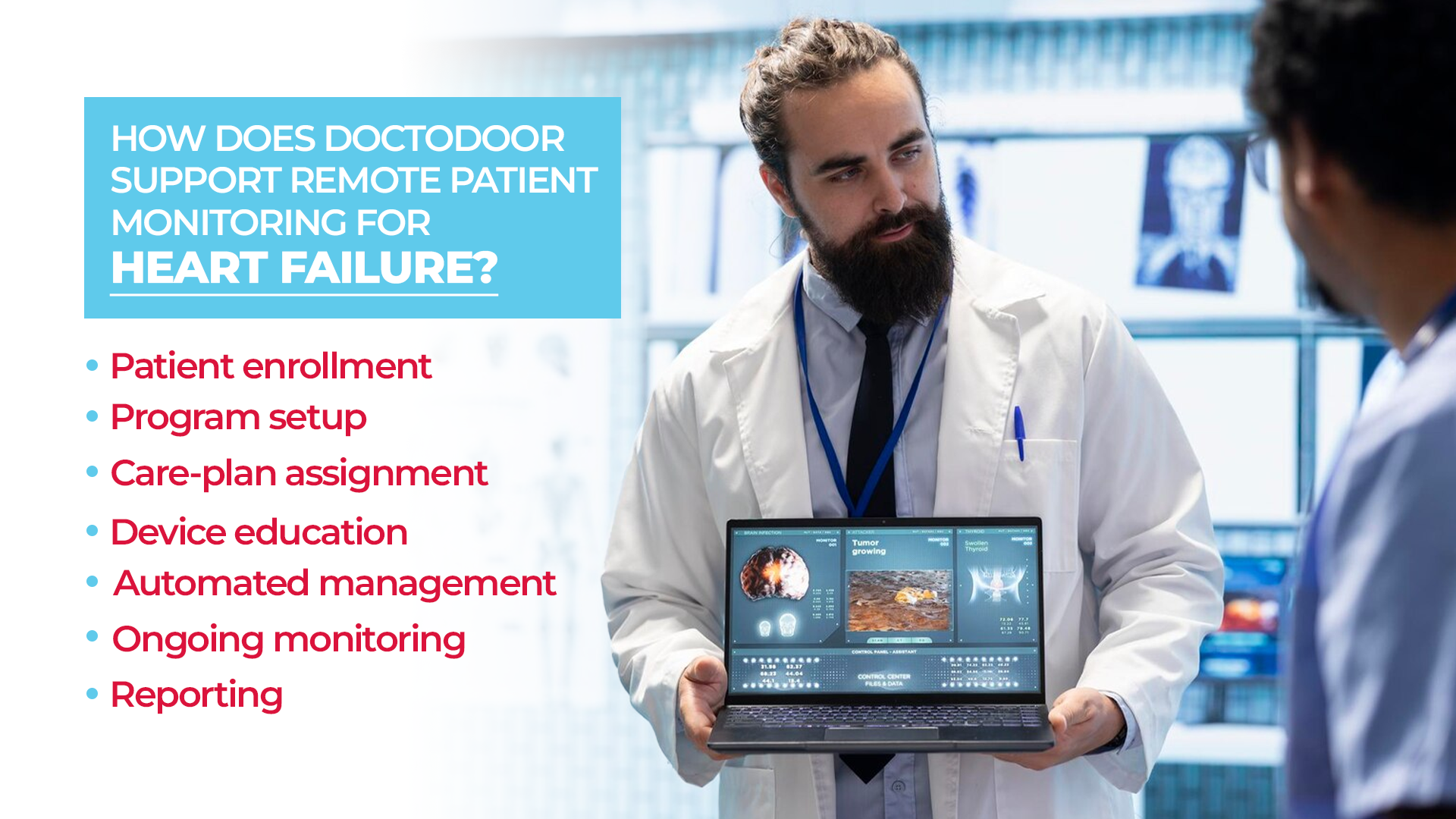
We provide a white-labeled telemedicine and RPM platform designed to connect patients, devices, and healthcare teams. Our workflow includes:
- Patient enrollment: Patients sign up through the clinic's white-labeled DocToDoor app.
- Program setup: Patients are enrolled with the appropriate consent.
- Care-plan assignment: Clinical staff assign care plans and configure alerts.
- Device education: Patients receive guidance on using their monitoring devices.
- Automated management: Goals, exercises, reporting measures, and symptom trackers can be assigned.
- Ongoing monitoring: Clinicians review patient progress through the platform and can communicate through secure chat.
- Reporting: The platform generates RPM reports for analysis and reimbursement.
How Can DocToDoor Support Your RPM Program?
We help healthcare organizations connect patients, monitoring devices, and clinical teams through a comprehensive telemedicine and remote patient monitoring platform.
Contact us to schedule a DocToDoor demo and explore how our Heart Rate Monitoring App can fit into your heart failure RPM workflow.