How RPM Is Transforming Care Delivery
Better Patient Experience, Fewer Hospital Visits
Missed follow-ups, declining patient engagement, frequent readmissions, and overburdened care teams, all these challenges are becoming all too common for clinics, ACOs, and post-acute care providers. As care shifts beyond hospital walls, traditional care models often fail to keep patients engaged once they return home. This gap not only impacts patient outcomes but also strains operational efficiency and revenue. This is where remote patient monitoring solutions play a critical role, reshaping how care is delivered, experienced, and sustained.
Enhancing Patient Experience Through Continuous Care
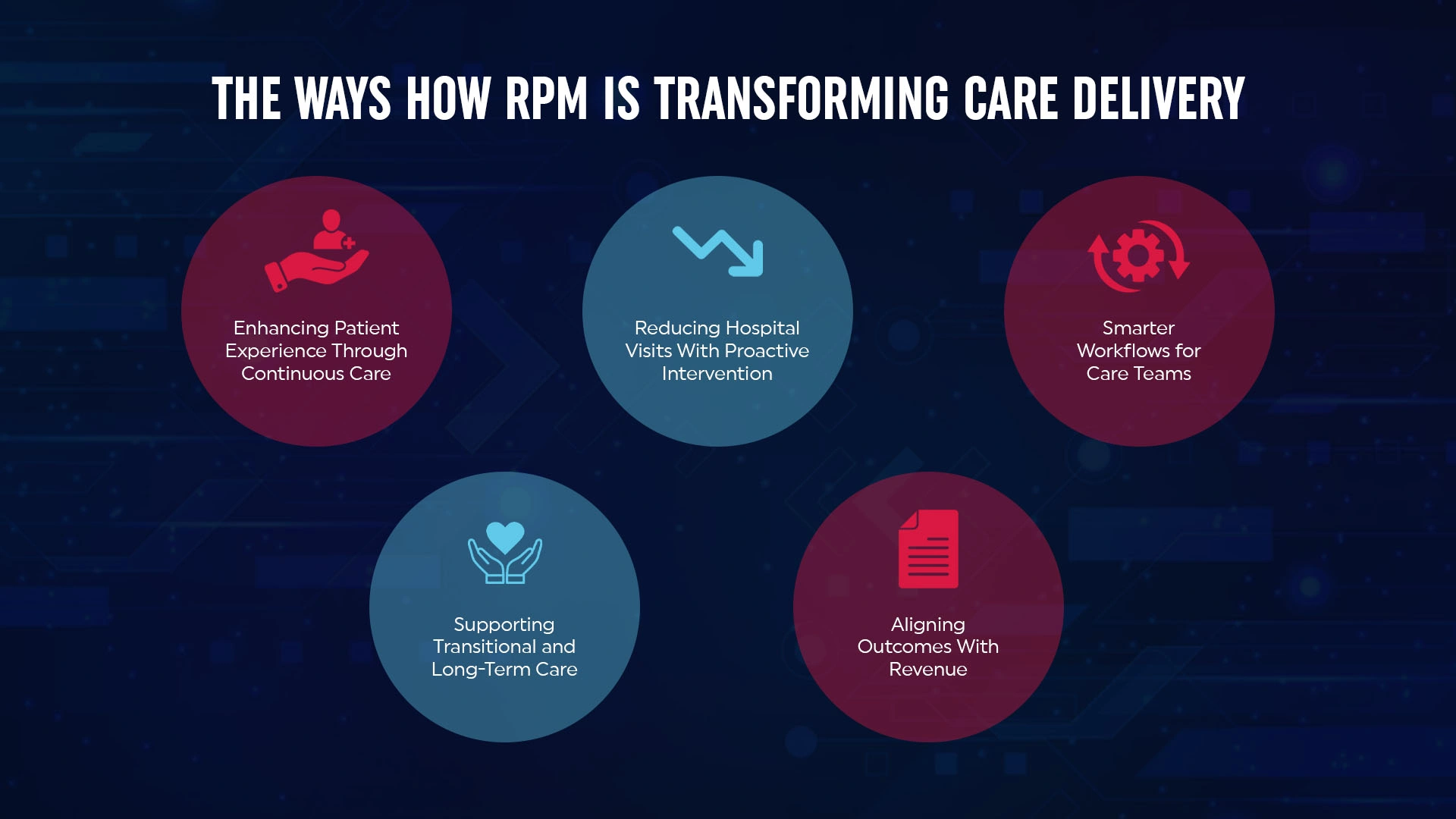
RPM enables providers to stay connected with patients in real time, rather than relying solely on episodic visits. By tracking vitals, symptoms, and trends remotely, care teams can proactively address concerns before they escalate. Patients feel supported knowing their health is being monitored continuously, which improves trust, adherence, and satisfaction, especially for those managing chronic conditions or recovering post-discharge.
Reducing Hospital Visits With Proactive Intervention
One of the most impactful benefits of RPM is its ability to prevent avoidable hospital visits. Real-time data allows clinicians to identify early warning signs and intervene promptly. This proactive approach significantly reduces emergency room visits and 30-day readmissions, easing pressure on hospitals while improving outcomes across value-based care programs.
Smarter Workflows for Care Teams
Modern remote patient monitoring solutions are no longer just data collection tools, they are intelligent care enablers. AI-prioritized dashboards, automated workflows, and real-time alerts help care teams focus on high-risk patients instead of manual monitoring. This leads to faster response times, reduced staff burnout, and better utilization of clinical resources.
Supporting Transitional and Long-Term Care
RPM extends its value beyond chronic care into Transitional Care Management (TCM) and long-term care environments. Structured post-discharge workflows, automated follow-ups, and care coordination help close gaps during critical transition periods. For skilled nursing and long-term care facilities, facility-wide monitoring and risk stratification reduce off-peak emergencies and improve regulatory compliance.
Aligning Outcomes With Revenue
In value-based care, better outcomes must align with sustainable revenue. RPM supports CMS-aligned documentation, billing workflows, and increased reimbursable touchpoints. By improving compliance and patient engagement, providers can maximize reimbursements while delivering higher-quality care.
Why DocToDoor Makes the Difference?
At DocToDoor, we turn RPM into measurable results. Our AI-powered platform is purpose-built for value-based care, helping providers reduce readmissions, improve patient engagement, and protect revenue, all while doing more with less. We support clinics, ACOs, and post-acute care teams with intelligent automation, real-time monitoring, and seamless care coordination across RPM, CCM, and TCM programs. With built-in compliance, scalable AI engagement, and full onboarding support, we help healthcare organizations deliver better care, reduce hospital visits, and achieve real ROI from remote care. Explore more about our remote patient monitoring solutions now!
FAQs
1. How does RPM improve patient engagement?
2. Can RPM really reduce hospital readmissions?
3. Is RPM suitable for post-acute and long-term care?
Follow us on LinkedIn.