From Reactive to Proactive Care
The New Era of Virtual Health Management
Healthcare organizations are moving away from reactive treatment models as they rely on delayed interventions and episodic visits. Rising readmissions, workforce shortages, and the shift toward value-based care show how important continuous, proactive management is. Virtual health management gives care teams the ability to monitor patients in real time, intervene earlier, and improve outcomes while controlling costs.
Remote patient monitoring technologies are at the center of this evolution, allowing providers to track patient health beyond the clinic or facility setting.
Why Reactive Care Models Are No Longer Sustainable
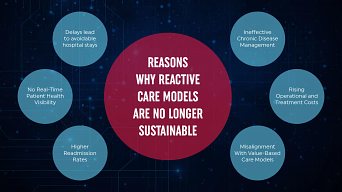
Traditional care models often respond only after symptoms worsen or patients require emergency care. Due to this reactive approach, patients and their families need to deal with avoidable hospitalizations, disruption in care continuity, and high operational costs.
Without real-time patient data, care teams lack visibility into early risk indicators. Delayed follow-ups and missed warning signs lead to readmissions, poor chronic disease control, and lower quality scores under value-based reimbursement programs.
How Remote Patient Monitoring Technologies Enable Proactive Care
With remote patient monitoring technologies, care teams can get continuous access to patient vitals and health trends. This data-driven visibility allows care teams to shift from responding to events to preventing them.
Real-Time Monitoring and Early Intervention
Smarter Care Coordination at Scale
The Role of Virtual Health Management in Value-Based Care
Proactive virtual care aligns directly with value-based care goals. Continuous monitoring supports better outcomes, higher patient engagement, and reduced unnecessary utilization.
Patients with chronic conditions and those transitioning from hospital to home benefit most from consistent follow-ups. Virtual health management helps maintain care plan adherence while reducing gaps during high-risk periods.
How DocToDoor Powers Proactive Virtual Care
DocToDoor delivers AI-powered remote care solutions designed for clinics, Accountable Care Organizations, and post-acute care teams seeking to operationalize proactive care.
Remote Patient Monitoring and Chronic Care Management
Transitional Care Management That Reduces Readmissions
Virtual Care for Skilled Nursing and Long-Term Care
Why Healthcare Teams Choose DocToDoor
DocToDoor is built specifically for value-based care workflows. The platform supports scalable patient engagement using voice, video, and chat AI, while remaining HIPAA-compliant and CMS-aligned. Integration options and full onboarding support allow organizations to adopt proactive virtual care without disrupting existing systems.
Moving Forward With Proactive Virtual Health Management
As healthcare continues to evolve, proactive care is becoming the standard. With the right virtual health management platform, remote patient monitoring technologies can deliver measurable improvements in outcomes, efficiency, and financial performance. Our remote patient monitoring solution helps healthcare teams move beyond reactive care and build a sustainable, patient-centered future.
Interested in learning more about our remote patient monitoring platform? Visit our website and book a demo!
Follow us on LinkedIn.