Beyond Telehealth: Building a Continuous Care Model That Prevents ER Visits
Building a Continuous Care Model That Prevents ER Visits
Are patients still using Emergency Departments for visits after being seen in your clinic or office? Is the volume of readmitted patients putting pressure on your clinicians, reimbursement margins, and quality scores? Many providers across the USA are coming to the conclusion that episodic care is no longer adequate. The key to an effective delivery system is to integrate the telehealth model with intelligent Remote Patient Monitoring (RPM) technology devices to create an integrated continuum of care that keeps patients healthy, on their treatment plans, and out of the hospital.
Why Telehealth Alone Isn’t Enough?
While telehealth has made accessing care easier for patients, it does not provide complete continuity of care because the telehealth visit is a factor of time. The problem is there are only “snapshot” measurements taken through virtual visits and no trend data for chronic patient care. By integrating telehealth with remote patient monitoring technology, providers gain:
- Real-time vitals between visits
- Early detection of deterioration
- Automated alerts for critical thresholds
- Structured CMS-compliant documentation
Instead of reacting to crises, care teams can step in early. This helps reduce avoidable ER visits and readmissions.
The Power of a Connected RPM Ecosystem
Modern remote patient monitoring platforms do more than gather data. They automate workflows, meet CMS billing requirements, and support scalable chronic care management.
A well-designed RPM model includes:
| Component | Clinical Impact |
|---|---|
| Electronic device data transmission | Meets CMS reimbursement criteria |
| 16+ readings per 30 days | Ensures billing eligibility |
| 20+ minutes interactive time | Strengthens patient engagement |
| Real-time dashboards | Improves decision-making speed |
| Automated compliance tracking | Reduces administrative burden |
When paired with remote patient monitoring rpm devices, including blood pressure monitors, glucose meters, pulse-ox devices, ECG monitors, and smart scales, providers gain actionable insights instead of fragmented information.
Flexible Deployment Across Care Settings
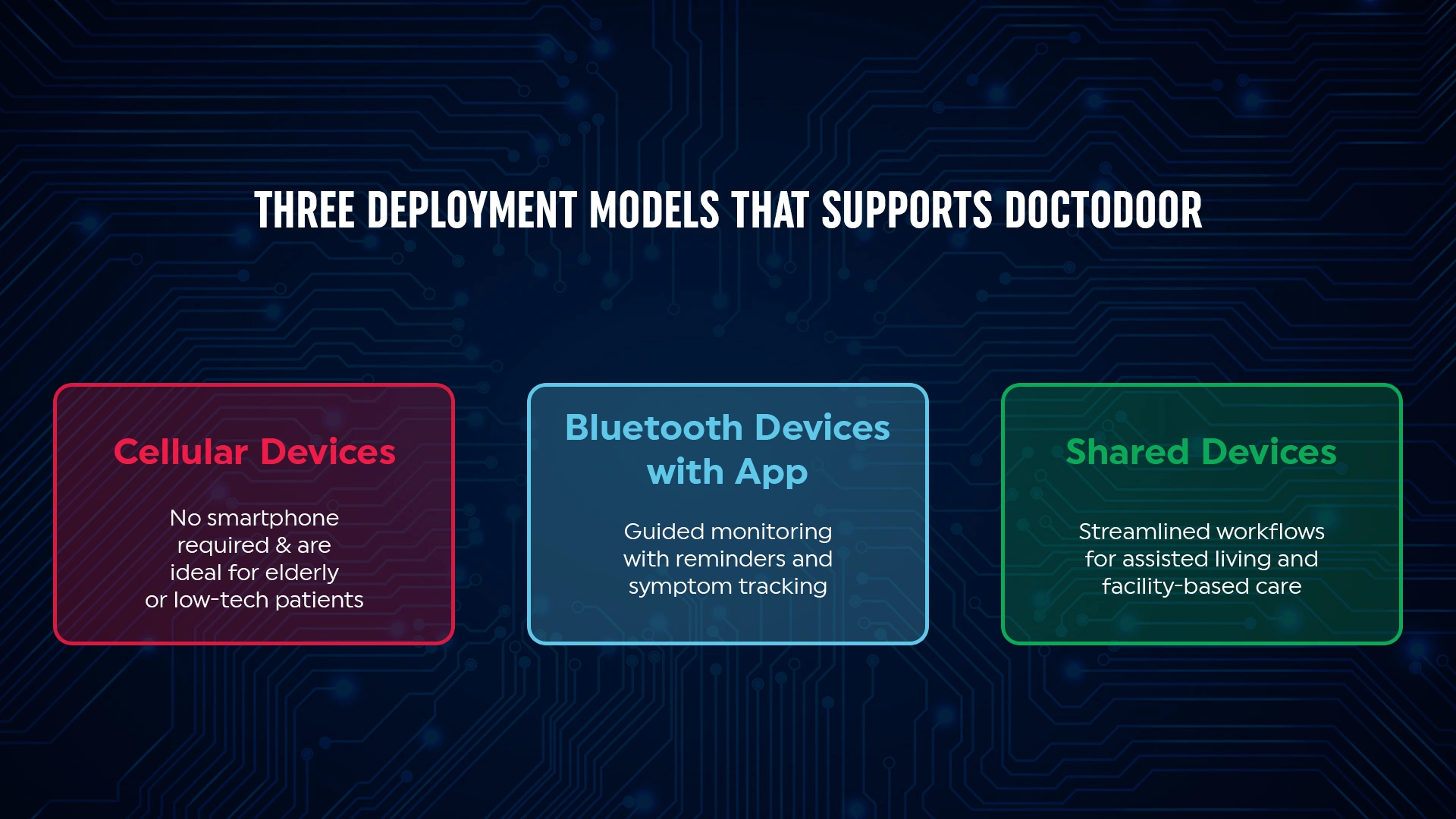
Healthcare delivery environments differ. Effective remote patient monitoring technology must adapt accordingly. DocToDoor supports three deployment models:
- For Home – Cellular devices: No smartphone required and ideal for elderly or low-tech patients
- For Home – Bluetooth devices with app: Guided monitoring with reminders and symptom tracking
- For Nursing Home – shared devices: Streamlined workflows for assisted living and facility-based care
These options ensure providers, hospitals, nursing homes, and assisted living facilities can implement scalable remote patient monitoring platforms without disrupting existing systems.
Why Continuity of Care Reduces ER Visits
When patients know someone is watching their vitals daily, adherence improves. When providers receive alerts before symptoms escalate, interventions happen sooner. When chronic conditions like hypertension, diabetes, or post-op recovery are monitored continuously, complications decrease.
The combination of telehealth visits and structured RPM creates proactive care-not reactive medicine.
Why Choose DocToDoor?
DocToDoor delivers an award-winning, turnkey Remote Patient Monitoring solution built for rapid deployment, often within 24 hours. Our AI-powered system integrates seamlessly with existing workflows, supports CMS-aligned billing, offers white-label flexibility, and visualizes patient data in intuitive dashboards.
For healthcare organizations across the USA seeking to reduce ER visits, prevent readmissions, and scale chronic care management efficiently, DocToDoor provides the infrastructure to automate care while improving outcomes.
Ready to modernize your care continuum? Request a demo and see how intelligent RPM transforms patient management.