Benefits of Using an AI-Powered Remote Care Platform for Modern Healthcare
Discover how an AI-Powered Remote Care Platform can help healthcare teams streamline monitoring, automate routine tasks, improve patient engagement and deliver more connected care.
Healthcare teams are being asked to do more with limited time, monitor patients beyond the clinic, keep up with care requirements, engage people consistently and manage growing amounts of health data. When these tasks depend heavily on manual follow-ups and disconnected processes, care teams can quickly become overwhelmed. An AI-powered remote care platform can help bring monitoring, communication, and care coordination into a more connected workflow.
What Makes AI-Powered Remote Care Different?
Remote care is no longer limited to virtual appointments. Modern platforms can combine remote patient monitoring, chronic care management and transitional care workflows in one environment.
With AI-supported tools, healthcare teams can use patient data and automated engagement to support ongoing care. DocToDoor, for example, provides AI-prioritised patient dashboards, real-time vital trends, automated patient engagement and care coordination features designed for value-based care workflows.
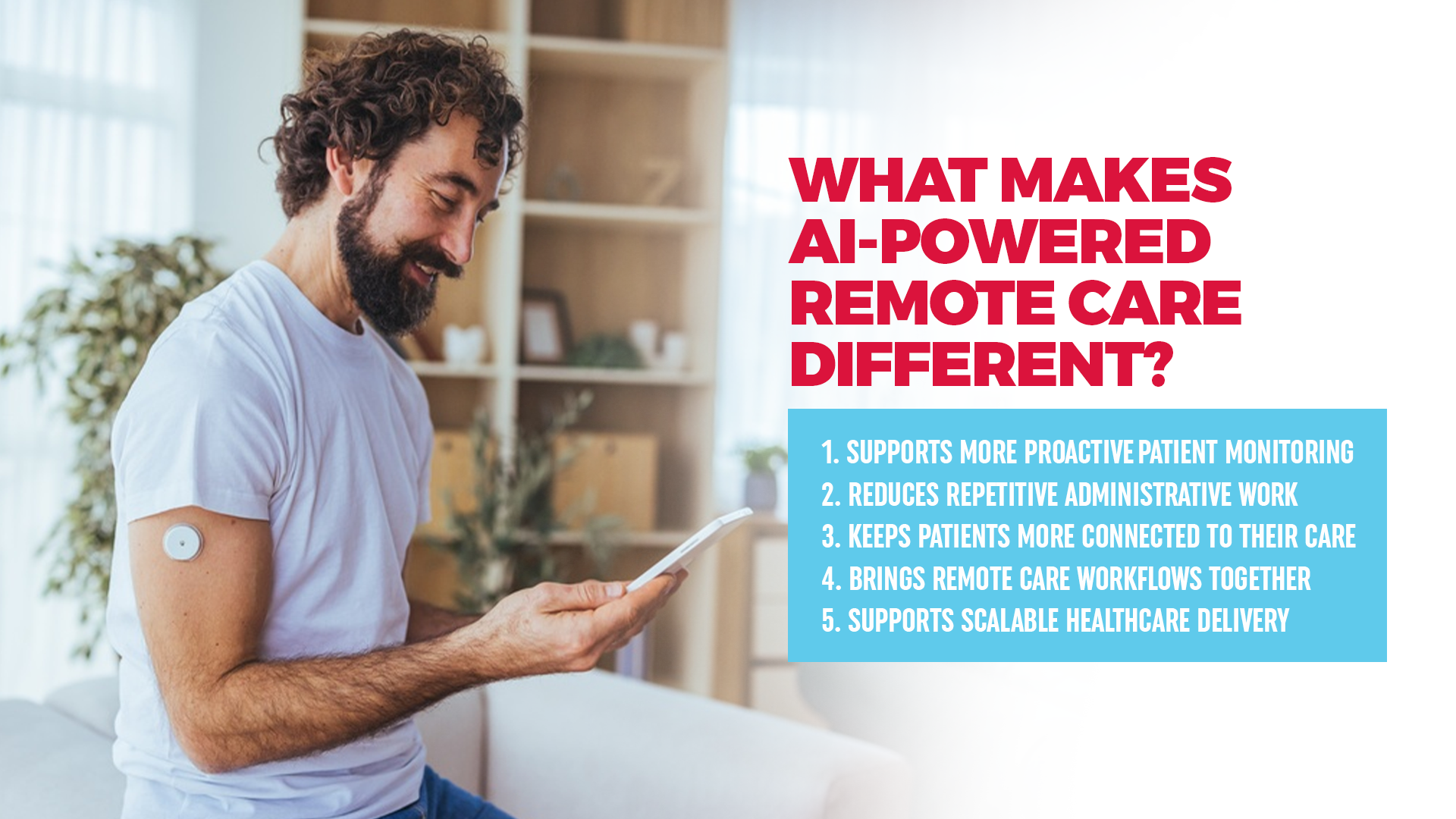
1. Supports More Proactive Patient Monitoring
One of the biggest advantages of an AI remote care platform is the ability to monitor patients outside traditional appointments. Connected devices can provide health measurements such as blood pressure, heart rate, blood oxygen, weight and blood glucose.
Rather than relying only on occasional office visits, clinicians can review patient data and trends remotely. The platform also supports automated alerts and compliance tracking, helping care teams keep track of ongoing monitoring requirements.
2. Reduces Repetitive Administrative Work
Healthcare professionals spend valuable time on documentation, patient communication and monitoring-related tasks. Automation can reduce some of this workload.
DocToDoor uses AI agents for patient engagement, including voice, video and chat interactions. Its platform also supports automated data capture, billing reports and structured documentation. This can help teams spend less time managing repetitive processes and more time focused on patient care.
3. Keeps Patients More Connected to Their Care
Remote healthcare works best when patients actively participate. A digital platform can support this through reminders, secure messaging, education, symptom tracking and personalised care plans.
DocToDoor's platform supports patient engagement through automated reminders, motivational messages, secure chat, educational content and care-plan goals. Patients can also use compatible connected devices to share health information with their care team.
4. Brings Remote Care Workflows Together
Managing different systems for telehealth, monitoring and care coordination can make workflows unnecessarily complicated. An AI-powered healthcare platform can provide a more unified approach.
DocToDoor combines remote patient monitoring with chronic care and transitional care workflows. It also supports HIPAA-compliant telemedicine, role-based dashboards, multi-device access and white-labeling options.
5. Supports Scalable Healthcare Delivery
A remote care solution needs to work for both smaller practices and larger healthcare organisations. DocToDoor states that its platform can scale from pilot sites to organisations managing thousands of patients, while adapting to existing team workflows.
This flexibility can make AI remote patient monitoring useful for clinics, ACOs, skilled nursing facilities and long-term care teams with different operational needs.
Why Choose DocToDoor for AI-Enabled Remote Care?
We built DocToDoor around practical healthcare workflows rather than technology for its own sake. Our platform brings monitoring, engagement, care coordination and reporting together while supporting HIPAA-compliant and CMS-aligned workflows. We also offer white-labeling and integration options, allowing organisations to create a remote care experience aligned with their own operations and brand.
If you're looking for AI-powered healthcare solutions that can support more connected and scalable remote care, we're ready to help.
Want to modernise your remote care workflow? Book a DocToDoor demo today and discover how AI-enabled monitoring and care coordination can fit into your healthcare practice.